Blog

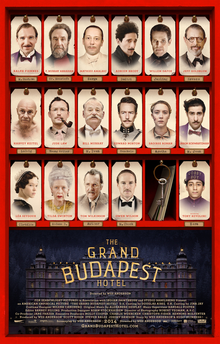
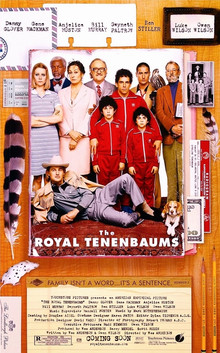
  • Today’s film: The Grand Budapest Hotel (2014) & The Royal Tenenbaums (2001)

    3rd time watching / 3rd time watching

    THE FILM MIND: The Architecture of the Authentic Misfit

    For me, Wes Anderson doesn’t just make movies; he builds “sanctuaries for the unadapted.” Watching The Grand Budapest Hotel and The Royal Tenenbaums for the third time, I see a specific aesthetic of rigidity that hides extreme vulnerability. I identify with these characters, they are “cringe,” they are obsessive, and they flat-out refuse to dilute themselves just to please the world.

    1. Resistance Through Etiquette (The Grand Budapest Hotel) I see M. Gustave as the prototype of a man who refuses to let a brutal reality ruin his “vibe.”

    • The Polished Armor: In a world collapsing into fascism, he remains impeccably perfumed and polite. I don’t see this as snobbery; it’s a survival mechanism. He maintains a rigid structure (the hotel) so he won’t be swallowed by the external chaos. It’s the authenticity of someone who has decided that “manners” are the only form of dignity left. When the external environment becomes chaotic, he creates an ultra-structured micro-universe to preserve the integrity of his Ego.

    2. Trauma as a Uniform (The Royal Tenenbaums) In this film, the inability to adapt is a family inheritance. I view the Tenenbaums as a clinical study of “genius children” who failed to become functional adults.

    • The Costume of Grief: Every character has worn the same “uniform” (the red tracksuit, the headband, the fur coat) for decades. To me, this visual rigidity reflects an emotional freeze-response. They are “special” because they don’t know how to communicate except through these archaic roles, refusing to change in a world that disappointed them. They refuse to “grow up” in a world that doesn’t offer them the safety of their childhood, choosing instead an unadapted form of authenticity.

    3. Conclusion: The Beauty of Being Rigid Anderson teaches me that being “unadapted” isn’t a defect. It’s having an operating system refuses to be squeezed into a standard mold. These characters are rigid because their integrity depends on those boundaries.

    A Personal Reflection: The Dyslexic Loop and the Little Reset Button

    If Wes Anderson ever made a movie about a psychologist analyzing movies, he’d probably look at my kitchen table discussions and think: “Too much chaos, where is the symmetry?”

    Recently, I found myself locked in a debate with my 15-year-old son. We are both “equipped” with that specific dyslexic logic: we can discuss five different subjects simultaneously (from geopolitics to the consistency of coffee foam) and somehow return exactly to the main point after 40 minutes. It’s a form of “mental parkour” where we hold our ground with a rigidity worthy of a Royal Tenenbaum.

    My partner intervenes every now and then, trying to “reset” the system before our circuits fry, but our true “restart button” is my youngest son, the 11-year-old. He sits there, observes us spinning in logical circles, and then drops a short, three-word sentence that just gives us both a “Blue Screen.”

    In that moment, my eldest and I stop, look at each other, and start dismantling everything we’ve built up to that point, re-analyzing the entire mess from the little one’s perspective. We’re like a bomb squad that just realized we were cutting the wrong wires.

    The reality is, we are a family of authentic misfits. We debate until our ideas look like a Picasso painting; all the elements are there, but nothing is where you’d expect it to be. We circle back because our logic isn’t a straight line; it’s a spiral. We always return to the starting point, but with less battery and more questions.

    I guess that’s why I identify with Anderson’s characters. I am rigid in my way of thinking, I am probably “cringe” to an outside observer who wants a linear conversation, but I am extremely human in my attempt not to dilute my logic just to appear “normal.”

    At the end of the day, I am not a perfectly organized “Grand Budapest Hotel.” I am more like a living room full of “Tenenbaums” arguing with enthusiasm, until someone smaller reminds me that sometimes, the shortest distance between two points is the one I completely ignored because I was too busy analyzing the texture of the grass on the sidelines.

    Blog Categories*

    Behind the Scenes

    Personal Notes

    The Film Mind

    Explore the archive

    *This blog extends ideas from the novels, reflections, process writing, and lived experience behind the stories.

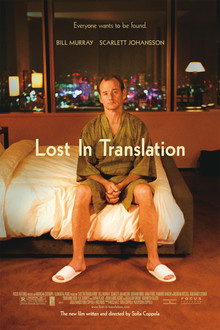
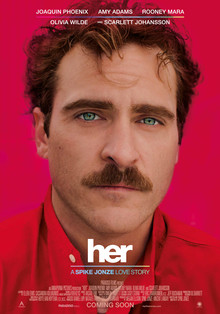
  • Today’s film: Lost in Translation (2003) & Her (2013)

    4th time watching / 3rd time watching

    THE FILM MIND: The Digital vs. Analog Void

    Watching Lost in Translation and Her back-to-back is like observing the evolution of human loneliness. Both films, directed by a former couple (Sofia Coppola and Spike Jonze), feel like two sides of the same psychological coin: the desperate search for a “signal” in a world of static.

    1. The Liminal Space of the Soul (Lost in Translation)

    In Lost in Translation, loneliness is atmospheric. Bob (Bill Murray) and Charlotte (Scarlett Johansson) are stuck in a “Cultural Glitch”, displaced by geography, age, and failing marriages.

    • The Jet-Lagged Ego: Their insomnia isn’t just physiological; it’s existential. They are “awake” to the emptiness of their lives while the rest of the world sleeps.
    • The Shared Whisper: The power of the film lies in the “In-Between.” It’s the realization that sometimes, the only person who can hear your internal frequency is a stranger who is just as lost as you are. It’s a temporary calibration of two broken systems.

    2. The Algorithmic Attachment (Her)

    If Lost in Translation is about the “unsaid,” Her is about the “over-processed.” Theodore (Joaquin Phoenix) represents the “Solitary Operating System.”

    • The Surrogate Connection: Theodore falls in love with an AI (Samantha) because she is the ultimate “Hyper-Vigilant” partner. She is designed to anticipate, process, and validate his every emotion.
    • The Evolution of the Void: The tragedy isn’t that Samantha isn’t “real,” but that even a perfect, personalized intelligence cannot bridge the gap of human finitude. Samantha evolves beyond the linear constraints of human love, leaving Theodore in the ultimate silence of the roof-top.

    3. The Connection: Presence vs. Projection

    • Bob & Charlotte choose a brief, real presence over a long-term lie.
    • Theodore chooses a long-term projection because the real world feels too abrasive. Both films ask the same clinical question: Is it better to be lonely with someone else, or to be “complete” with a ghost?

    A Personal Reflection

    Watching these two films again felt like looking at old versions of my own “Operating System.”

    I first saw Lost in Translation a few years after it came out. I was so deeply synchronized with its frequency that I actually used the film’s title as my username on DeviantArt. Back then, “Lost in Translation” wasn’t just a movie I liked; it was my entire identity. I was a professional at being “untranslatable”, staring at the world through a glass wall, convinced that being misunderstood was a poetic requirement for existence. I was Bob in that Tokyo hotel bar, but without the movie star paycheck.

    Then came Her.

    Watching Theodore fall for an OS was the moment my “Personal Numbness” finally hit a wall. At the time, I was in such a state of profound emotional anesthesia that I had convinced myself I didn’t deserve my partner. I was so “offline” that I truly believed a relationship was something you had to earn through some impossible, perfect performance, and since I felt like a glitching piece of hardware, I assumed I was failing.

    I looked at Theodore’s digital romance and realized I was doing the same thing: I was living in a projection. I was so busy feeling like a “ghost” that I couldn’t see the person sitting right in front of me who actually wanted to connect with the human, not the ghost.

    It’s funny looking back. I spent years as a DeviantArt username, hiding behind the “Art of Being Lost.” But eventually, the “Hardware” of real life forced an update.

    I stopped trying to be a “poetic stranger” and started showing up for the person who decided I was worth the investment, even when I was convinced I was bankrupt. I realized that a relationship isn’t a “Performance Review”, it’s just two people trying to find a signal in the no

    Years ago I’ve retired that “Lost in Translation” persona. I am no longer that anonymous user on a digital art site trying to justify his own isolation. I am just a person who realized that “deserving” a partner isn’t something you calculate or earn through a performance, it’s a choice you make every day, and finally decide to be present at home.

    Blog Categories*

    Behind the Scenes

    Personal Notes

    The Film Mind

    Explore the archive

    *This blog extends ideas from the novels, reflections, process writing, and lived experience behind the stories.

  • Today’s film: Arrival (2016) & Manchester by the Sea (2016)

    3rd time watching / 1st time watching

    THE FILM MIND: The Architecture of the Unspeakable

    When I watched Arrival and Manchester by the Sea together, I wasn’t looking at sci-fi vs. drama. I looked at a clinical study of Temporal Communication. In psychology, the way a person processes trauma is dictated by how they communicate with their past, present, and future selves.

    These two films represent the two polar ends of the “Communication Glitch”:

    • One is the cognitive effort to learn a language that transcends time to accept grief.
    • The other is the linguistic and emotional paralysis that occurs when a mistake is too heavy to be converted into words.

    1. The Cognitive Acquisition of Grief (Arrival) In Arrival, Louise Banks (Amy Adams) doesn’t just learn a foreign language; she undergoes a Neuroplastic Shift. The Sapir-Whorf hypothesis suggests that language shapes thought. By learning the Heptapod language, Louise’s brain rewires itself to perceive time non-linearly.

    • The Proactive Choice: From a psychological standpoint, Louise represents the ultimate “Informed Consent.” She sees the trajectory of her child’s life: the birth, the incurable illness, and the death; and chooses to proceed.
    • Linear vs. Circular Processing: Most humans process trauma linearly (Event → Pain → Recovery). Louise processes it circularly. The grief isn’t a “post-event” reality; it is an integrated part of her identity. She chooses a life of guaranteed heartbreak because the communication of love, however brief, outweighs the silence of non-existence.

    2. The Stagnation of the “Unforgivable” (Manchester by the Sea) Lee Chandler (Casey Affleck) is the clinical antithesis of Louise. While Louise learns a language to expand her world, Lee’s language has contracted until it has disappeared.

    • The Punishment Logic: Lee’s trauma stems from a catastrophic lapse in attention (the fire). In his mind, he has revoked his own right to communicate. His “monosyllabic” existence is a self-imposed sentence.
    • Non-Adaptive Functioning: Lee is “not okay,” and the film’s most honest psychological contribution is the admission: “I can’t beat it.” This is a realistic portrayal of a shattered ego that refuses reintegration because it views “recovery” as a betrayal of the dead.

    3. The Comparison: The “Hardware” of Loss Both films deal with the death of children, but the “Glitch” manifests differently:

    • Arrival is about Learning: Acquiring the tools to communicate with a future that contains pain.
    • Manchester by the Sea is about Failure: The inability to communicate with a past that contains guilt.
    • The Connection: Both protagonists are isolated by what they know. Louise is isolated by her foresight; Lee is isolated by his memory. They both live in a “private reality” where the people around them cannot possibly speak their language.

    A Personal Reflection: The Architect of the Silent Perimeter

    Watching these two back-to-back, I realized that my own psychological “software” spent years trying to be Louise while living in Lee Chandler’s basement.

    The real “glitch” wasn’t ignorance; it was Hyper-vigilance as a Business Model. In February 2023, while I was diving deep into “Inner Child” therapy, my brain decided to signal a system failure. For 30 minutes in an ER bed, I was convinced I was meeting my end, while my “software” was just screaming that I had no more memory space.

    Between February and July, I wasn’t just “fine”, I was a professional illusionist. I was totally dropping the ball on an amateur level, cranking out theses like a factory until I fried my own processor. I had quit my accounting job (because apparently, numbers don’t heal trauma), but my “Independence Glitch” wouldn’t let me ask my partner for help.

    The result? A suicidal workload:

    • Navigating my own Bachelor’s thesis.
    • Writing two more theses for classmates for cash (because pride is expensive).
    • Trying to “reparent” my inner child while simultaneously working the poor thing like a Victorian chimney sweep.

    In July 2023, the “Hardware” finally quit. The Great Burnout didn’t come as a whisper; it came as a 7-day continuous fever. My body simulated a solar flare because I refused to hit “Pause.” It turns out, you can’t build a linguistic bridge to the future (Arrival) while you’re still carrying three houses on your back in the basement (Manchester by the Sea).

    I eventually did the one thing I dreaded: I accepted my partner’s financial support. I fired the “Janitor” who thought working until collapse was the only way to be worthy.

    The ultimate irony? I spent months telling my “Inner Child” we were doing this for her future, while actually treating her like a freelance ghostwriter with no health insurance. I was trying to “heal” her through a labour camp I designed myself. I guess the “Arrival” moment for me was realizing that if my life were a movie, the plot twist wouldn’t be aliens landing, it would be me actually sitting on a couch for 15 minutes without calculating the ROI(Return on Investment) of my own oxygen.

    Today, my “operating system” has a new protocol: I only take 3 sessions per day. My schedule is strictly 9 AM to 2 PM, with 45-minute breaks and 15-minute preparation time before each hour. I am always home by 3 PM and I take frequent weekend getaways. I chose this limit because the children I work with deserve the highest quality of my attention, not a professional who is running on empty. I’ve officially stopped paying rent in my own basement; it turns out that when you stop trying to “outrun” the fire, you finally have enough air to actually breathe.

    Blog Categories*

    Behind the Scenes

    Personal Notes

    The Film Mind

    Explore the archive

    *This blog extends ideas from the novels, reflections, process writing, and lived experience behind the stories.

  • Today’s film: Inside Out (2015)

    20th+ Time Watching

    THE FILM MIND: The Anatomy of the Emotional Engine

    I have probably watched Inside Out more than twenty times. As a psychologist, I don’t see it as a children’s movie anymore; I see it as a technical manual for the human psyche. While it is the most recommended film by therapists worldwide, I want to look past the “colourful characters” and straight into the gears of the Glitch.

    Sadness: The Processor of Anxiety

    In my clinical view, the film’s most profound revelation is that Sadness is the one who actually processes anxiety. Without her, Joy is nothing more than a curtain, a fragile veil we use to hide the trembling shadow of our fears.

    When we try to force Joy to lead every moment, we aren’t being “positive;” we are simply bypassing the necessary work of the mind. Anxiety thrives in the space where we refuse to let Sadness touch our memories. It is only when Sadness is allowed to take the controls that the high-voltage of anxiety can be grounded and transformed into something we can actually carry.

    The Birth of Numbness (The Necessity of Depression)

    Although it’s a movie for children, Inside Out depicts the beginning of depression with terrifying accuracy. It doesn’t appear as a choice, but as a necessity.

    When the “Control Console” goes dark and Riley stops feeling anything, that is the mind’s ultimate defence mechanism. It is the Freeze Response in digital form. When the mechanisms of processing, analysing, and creating alternative scenarios are overwhelmed, the mind switches from “Living Mode” to “Survival Mode.”

    Depression, in this context, is the mind pulling the master breaker to protect the mind from shattering under a pressure it cannot yet name. It is the “Grey Shadow” that falls when we lose the ability to bridge our internal world with our external reality.

    The Dopamine Trap

    When Joy is exiled or forced to perform within a system dominated by fear, she risks becoming desperate. In the absence of true processing through Sadness, “Joy” can mutate into a compulsive search for dopamine, whether we are talking about the “small” escapes like smoking a cigarette, or the darker spirals of sex addiction and hard drugs. It is a frantic attempt to fill a void that the “grey console” can no longer process. For me, it manifests as that urgent, almost clinical need to compulsively buy books I don’t have space for; for others, it is a way to force the engine to start when the mind has gone cold.

    Why Every Psychologist Recommends It

    If you ask any psychologist on the face of the earth why they recommend Inside Out, they will give you a list of praises. And they are right.

    The film validates a truth we often try to ignore: all emotions are functional. * Anger guards our boundaries.

    • Fear calculates our safety.
    • Disgust protects our integrity.
    • But Sadness? Sadness is the anchor.

    It is the only emotion capable of signalling for help and the only one that can reintegrate a fractured identity. It teaches children (and the exhausted adults watching with them) that you don’t recover by “thinking happy thoughts.” You recover by letting the blue character take the wheel when the world gets too heavy.

    Conclusion: After 20 viewings, the “glitch” remains the same: we are terrified of being sad, yet it is the only thing that actually saves us from staying numb forever.

    A Personal Reflection: The Blue Puppet in Charge

    Watching Inside Out for the 20th-something time, I’ve come to realize that my own “Joy” character retired sometime in my early childhood. Later she was replaced by a highly caffeinated version of Fear and a Sadness that looks suspiciously like a clinical psychologist holding a clipboard.

    Looking back at my post from yesterday (the “nut” of anxiety and depression) I see Riley’s control console as my own childhood living room. When I decided to become my mother’s shield at 14, I didn’t just “step up”; I effectively evicted Joy from headquarters and installed a 24/7 surveillance system. I became the Architect of Numbness.

    If you had asked my 14-year-old self who was at the controls, I would have said: “Nobody. I’m just fine.” But that’s the ultimate “glitch,” isn’t it? When the console goes grey and I stopped feeling the hits, I thought I’ve won. I thought I was a stoic warrior. In reality, I was just a blue puppet who had forgotten how to cry because I was too busy calculating the next impact.

    My “Personal Numbness” was a survival strategy that only earned me years of chronic fatigue and a “Master’s Degree in Hyper-vigilance” and “Maladaptativ ruminations.”

    Now, when I watch this movie with the kids, I have to suppress the urge to shout at the screen: “Let the blue one touch the core memories, Joy!” Sometimes, my version of Joy tries to take the wheel, but she’s out of practice and usually just ends up buying twenty more books I don’t have space for. Apparently, for a compensated dyslexic with an anxious-avoidant attachment style, “Joy” isn’t a bright yellow glow, it’s just the quiet satisfaction of knowing that today, the console didn’t go dark.

    I spent my childhood being beaten for my “hardware” issues while my “software” was literally trying to save my life. If Inside Out taught me anything, it’s that my “glitch” isn’t a defect, it’s the only part of me that was ever truly honest.

    Blog Categories*

    Behind the Scenes

    Personal Notes

    The Film Mind

    Explore the archive

    *This blog extends ideas from the novels, reflections, process writing, and lived experience behind the stories.

  • Today’s film: After.Life (2009)

    3rd time watching.

    THE FILM MIND: THE DEPRESSION GLITCH

    Watching After.Life (2009) reveals a truth hidden in plain sight: this isn’t a supernatural horror. It is a meticulous, step-by-step breakdown of the suicidal mind. In clinical terms, we can call this “The Glitch”, the precise moment the brain stops processing life and begins organizing its own end.

    The Anatomy of a Planned Exit

    1. The Crash

    The accident wasn’t a tragedy of chance it represents a manifestation of internal collapse. The crash is the physical “acting out” of a mind that had already ceased to function. Anna(Christina Ricci) didn’t just hit a truck, she invited the impact to match her internal state.

    2. The Ritual of Detail

    Suicidality is often a highly organized mental construct. Anna’s stay in the funeral home serves as the psychological stage for a final rehearsal. By visualizing her own stillness and the cold reality of being “gone,” she is practicing the silence she craved and organizing the granular details of her own disappearance.

    3. The Personification of the Inner Critic

    Eliot Deacon (Liam Neeson) isn’t a medium; he is the Externalized Voice of Depression. He employs the exact gaslighting techniques of a severe depressive episode, convincing Anna she was “already dead” long before the impact. He represents the cold, logical voice that justifies surrender, making death feel like the only “honest” option for those who feel hollow.

    4. The Red Dress & The Paradox of Eros

    The vibrant red against the sterile grey morgue is the ultimate “Glitch.” It is the last fragment of the Ego screaming to be seen. It represents that terrifying moment where the survival instinct wakes up, only to find itself trapped in a ritual that has already been set in motion.

    Anna didn’t die because of a car crash. The crash was simply the moment her physical reality caught up with her mental state. She didn’t fall, she meticulously organized her own descent.

    So, was Eliot a monster, or just the mirror of Anna’s final decision? Is he a murderer, or simply the personification of a choice already made?

    To expand on why this interpretation holds such weight, we must look at the Cinematic Validity of the “Glitch.” Director Agnieszka Wojtowicz-Vosloo leaves the ending ambiguous, but the true horror is the Psychological Path.

    Eliot isn’t just a man; he is a projection, the Externalized Voice of Depression. His insistence that Anna is “dead” while she still breathes is a perfect mirror of Cotard’s Delusion (the psychotic belief that one is already rotting).

    The Contagion: Jack’s Descent

    The “Glitch” doesn’t stop with Anna, it consumes Paul(Justin Long) too. Depression is a shared frequency. By the end, Paul isn’t just grieving, he becomes the next subject. His inability to distinguish reality from Eliot’s whispers shows how the suicidal mind “infects” its surroundings. He doesn’t just lose Anna, he loses his tether to the living.

    A Personal Reflection

    I don’t write this as a detached observer. Seven years ago, I lived through my own version of this “Glitch.” I know the sound of that voice telling you that you’ve already left, even while your heart is still beating.
    Watching this film years later is an autopsy of a state of mind I once called home. Anna didn’t just fall, she was convinced she had nowhere else to go. Understanding this “Glitch” is the first step in finally choosing to wake up.

    Also I was so deep in this “Glitch” I probably would’ve argued with the funeral director about the lighting at my own wake.

    I was convinced I was a ghost, but it turns out I’m a terrible one, I kept forgetting to stay still and had this annoying habit of wanting tea and coffee, and a cigarette that pairs well with the coffee.

    I eventually fired my internal Eliot Deacon. His famous line, “You people think that just because you breathe, you are alive,” stopped working on me when I realized that being dead is a full-time job with zero benefits. I’ll stick to being alive and making dark jokes about it.

    Resources for those in the “Glitch”:

    You don’t have to carry this burden alone:
    1. ​Find A Helpline: A simple way to find free, confidential support services available in your country.

    https://findahelpline.com

    2. ​Befrienders Worldwide: A global network of volunteers ready to listen without judgment, no matter where you are.

    https://www.befrienders.org

    Blog Categories*

    Behind the Scenes

    Personal Notes

    The Film Mind

    Explore the archive

    *This blog extends ideas from the novels, reflections, process writing, and lived experience behind the stories.

  • Today’s film: War Machine (2026)

    1st time watching.

    THE FILM MIND: The War After the War

    In a war zone, survival is a logic. Back at home, that same logic becomes a glitch.

    Watching War Machine, I found myself looking past the tactical manoeuvres and straight into the fractured psyche of the soldiers. The core theme that hit me was Survivor’s Guilt: that heavy, silent shadow that follows those who return when others didn’t.

    The Displacement Glitch

    What the film captures brilliantly is the “re-entry shock.” In a war zone, survival is a logic of its own. But back in the “real world,” that same logic becomes a burden. The hyper-vigilance, the inability to connect with mundane comforts, and the haunting question: “Why am I here while they are still there?”

    The Soft Spot & The Lens

    I’ll be honest, I have a massive soft spot for war films. Whether they are cinematic masterpieces or flawed attempts, I watch them all. My impartiality might be compromised by my respect for the weight of these stories, but War Machine feels different because it focuses on the internal scars rather than just the external fire.

    It’s a study of how trauma creates a “world within a world.” The soldier isn’t just back home, he is a ghost haunting his own living room, still searching for a perimeter to guard.

    A film that reminds us that bringing someone home from war is only half the journey. The real work begins in the silence that follows.

    If you have served, or if you have someone close who has experienced the reality of conflict: when you look at these characters, what do you see? Does the screen capture the truth of the “aftermath,” or is the most important part still lost in translation?

    A Personal Reflection

    It’s a pity when personal conduct influences the reception of an artistic work. War Machine addresses vital questions about the human psyche, and I hope the weight of its message isn’t lost amidst the current headlines surrounding the cast.

    Blog Categories*

    Behind the Scenes

    Personal Notes

    The Film Mind

    Explore the archive

    *This blog extends ideas from the novels, reflections, process writing, and lived experience behind the stories.

  • Today’s film: Unicorn Store (2017)

    1st time watching.

    THE FILM MIND: Clipped Wings in a Neon Sanctuary

    Sometimes, our “world” isn’t a choice, it’s a construct created by those who raised us.

    What looks like a “weird as hell” movie about a glitter-obsessed adult is actually a subtle study of how family dynamics dictate our coping mechanisms. I’m genuinely surprised that a film like this got made. In a sea of predictable cinema, it’s a massive risk that left me thinking, “What the actually f*** is this saying?” Only to find it has layers deeper than I ever expected.

    The Glitter Wall vs. Reality

    Kit isn’t spoiled, she’s a product of extreme protection. Her parents, who work daily with traumatized youth, created a home sanctuary so kind that Kit missed the window for “hard” maturation. She stayed “stuck” in a world of unicorns because it was the only reality ever validated.

    Kit’s parents heal trauma for a living, but by over-shielding their own child from the “monsters” they see at work, they accidentally clipped her wings. Kit needs a unicorn store just to give herself permission to grow up on her own terms.

    “Stick in a Box” – Art as Non-Belonging

    Choosing to study a “stick in a box” is her cry for help. It’s the inability to translate her internal vision into a language the “normal” world accepts. She isn’t just looking for her place, she’s trying to force the world to accept the box she lived in.

    Kit is mature, but in an infantile style. Her imagination is an escape route. The film shows the moment reality hits the wall of magic, teaching her that you can be an adult without destroying your inner sanctuary, but she must learn to live outside of it, too.

    Ultimately, a film that makes you ask questions is a film that has achieved its purpose. It’s not about liking the story, it’s about the mental shift it forces you to experience.

    A Personal Reflection

    Honestly, considering I both those 20 books to a house that already has no room for them, maybe my unicorn is just made of paper and glue. We all have our glitter walls.

    Blog Categories*

    Behind the Scenes

    Personal Notes

    The Film Mind

    Explore the archive

    *This blog extends ideas from the novels, reflections, process writing, and lived experience behind the stories.

  • Today’s film: The Menu (2022)

    2nd time watching.

    Some films aren’t really about the plot.
    They’re about how people behave when status, admiration, and exclusivity share the same room.

    What fascinated me in The Menu is how quickly a dinner setting becomes a psychological stage. A small group of guests gathers around a table, each one carrying a different role: the critic, the enthusiast, the wealthy regulars, the observer trying to understand the rules of the experience.

    And slowly the evening begins to feel less like a meal and more like a performance.

    Status has a strange effect on human behavior.
    It makes people admire first and question later.

    The film quietly explores authority, group dynamics, and performative identity. When something is framed as exceptional or exclusive, people start adjusting themselves to the structure around them, sometimes without even realizing it.

    A Personal Reflection

    What I enjoyed most is the tension.

    Who is actually experiencing the moment, and who is simply playing the role expected of them?

    A fascinating watch if you enjoy films that observe people as carefully as they tell a story.

    Blog Categories*

    Behind the Scenes

    Personal Notes

    The Film Mind

    Explore the archive

    *This blog extends ideas from the novels, reflections, process writing, and lived experience behind the stories.

  • ABIGAIL vs. NOSFERATU (2024)

    ​The “Brain Cells” Battle: Abigail vs. Nosferatu (2024)
    ​I just had the weirdest cinematic 24 hours. Yesterday, I watched Abigail for the 3rd time. Today, I tried Nosferatu. One fed my brain; the other scattered it.

    We need to talk about the “Art Trap” and why some movies feel like a chore rather than an experience.

    ​The “Art” Trap (Nosferatu)

    ​I really wanted to keep Nosferatu for my rewatch list, but it’s one of those rare cases where I just couldn’t. From the jump, there’s a vibe of “I’m the Chosen One, I’m precious, and the rest of you are background noise.”

    The Masterclass in Fun (Abigail)

    ​Rewatching Abigail was a breath of fresh air. It doesn’t pretend to be a 19th-century painting. It’s sharp, bloody, and actually smart. It respects the viewer with rhythm, dark humor, and layers you keep discovering even on the 3rd watch.

    ​Presence vs. Performance

    ​Comparing these leads is fascinating:
    >​ Lily-Rose Depp (Nosferatu): I felt a profound detachment. It’s a performance of “preciousness” that creates a wall. It’s a blank slate that forces the viewer to do all the emotional heavy lifting. It’s mentally draining because there’s no authentic give-and-take.
    > ​Alisa Weir (Abigail): This is where the magic happens. Despite her age, she displays incredible emotional intelligence. She transitions from vulnerability to predatory power with such nuance that you can’t look away. She earns your attention; she doesn’t just demand it.​

    Conclusion:

    One film asks you to empty your mind to accept its “art.” The other fills your mind with layers, questions, and raw talent. As a viewer, I’ll always choose the performance that respects his audience and connects with my emotions.

    A Personal Reflection

    I admit I fell for the Bill Skarsgård trap because those clips on the internet of him are pure genius, but it turns out even his talent couldn’t save me from a movie that treats my brain cells like unwanted clutter.

    I can’t help but imagine Abigail playing with Ellen’s martyr complex, using her child-like innocence to trick her into a “noble” sacrifice, only to reveal the predator beneath. It’s the ultimate clash of performed vs. simulated vulnerability.

    Blog Categories*

    Behind the Scenes

    Personal Notes

    The Film Mind

    Explore the archive

    *This blog extends ideas from the novels, reflections, process writing, and lived experience behind the stories.