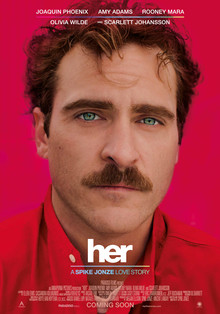
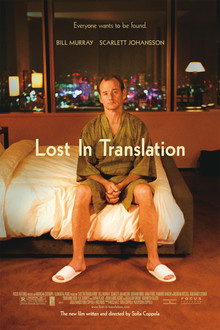
4th time watching / 3rd time watching

THE FILM MIND: The Digital vs. Analog Void
Watching Lost in Translation and Her back-to-back is like observing the evolution of human loneliness. Both films, directed by a former couple (Sofia Coppola and Spike Jonze), feel like two sides of the same psychological coin: the desperate search for a “signal” in a world of static.
1. The Liminal Space of the Soul (Lost in Translation)
In Lost in Translation, loneliness is atmospheric. Bob (Bill Murray) and Charlotte (Scarlett Johansson) are stuck in a “Cultural Glitch”, displaced by geography, age, and failing marriages.
- The Jet-Lagged Ego: Their insomnia isn’t just physiological; it’s existential. They are “awake” to the emptiness of their lives while the rest of the world sleeps.
- The Shared Whisper: The power of the film lies in the “In-Between.” It’s the realization that sometimes, the only person who can hear your internal frequency is a stranger who is just as lost as you are. It’s a temporary calibration of two broken systems.
2. The Algorithmic Attachment (Her)
If Lost in Translation is about the “unsaid,” Her is about the “over-processed.” Theodore (Joaquin Phoenix) represents the “Solitary Operating System.”
- The Surrogate Connection: Theodore falls in love with an AI (Samantha) because she is the ultimate “Hyper-Vigilant” partner. She is designed to anticipate, process, and validate his every emotion.
- The Evolution of the Void: The tragedy isn’t that Samantha isn’t “real,” but that even a perfect, personalized intelligence cannot bridge the gap of human finitude. Samantha evolves beyond the linear constraints of human love, leaving Theodore in the ultimate silence of the roof-top.
3. The Connection: Presence vs. Projection
- Bob & Charlotte choose a brief, real presence over a long-term lie.
- Theodore chooses a long-term projection because the real world feels too abrasive. Both films ask the same clinical question: Is it better to be lonely with someone else, or to be “complete” with a ghost?
A Personal Reflection
Watching these two films again felt like looking at old versions of my own “Operating System.”
I first saw Lost in Translation a few years after it came out. I was so deeply synchronized with its frequency that I actually used the film’s title as my username on DeviantArt. Back then, “Lost in Translation” wasn’t just a movie I liked; it was my entire identity. I was a professional at being “untranslatable”, staring at the world through a glass wall, convinced that being misunderstood was a poetic requirement for existence. I was Bob in that Tokyo hotel bar, but without the movie star paycheck.
Then came Her.
Watching Theodore fall for an OS was the moment my “Personal Numbness” finally hit a wall. At the time, I was in such a state of profound emotional anesthesia that I had convinced myself I didn’t deserve my partner. I was so “offline” that I truly believed a relationship was something you had to earn through some impossible, perfect performance, and since I felt like a glitching piece of hardware, I assumed I was failing.
I looked at Theodore’s digital romance and realized I was doing the same thing: I was living in a projection. I was so busy feeling like a “ghost” that I couldn’t see the person sitting right in front of me who actually wanted to connect with the human, not the ghost.
It’s funny looking back. I spent years as a DeviantArt username, hiding behind the “Art of Being Lost.” But eventually, the “Hardware” of real life forced an update.
I stopped trying to be a “poetic stranger” and started showing up for the person who decided I was worth the investment, even when I was convinced I was bankrupt. I realized that a relationship isn’t a “Performance Review”, it’s just two people trying to find a signal in the no
Years ago I’ve retired that “Lost in Translation” persona. I am no longer that anonymous user on a digital art site trying to justify his own isolation. I am just a person who realized that “deserving” a partner isn’t something you calculate or earn through a performance, it’s a choice you make every day, and finally decide to be present at home.


Blog Categories*
*This blog extends ideas from the novels, reflections, process writing, and lived experience behind the stories.
Leave a Reply