Blog

  • The “Cringe” Verdict Glitch

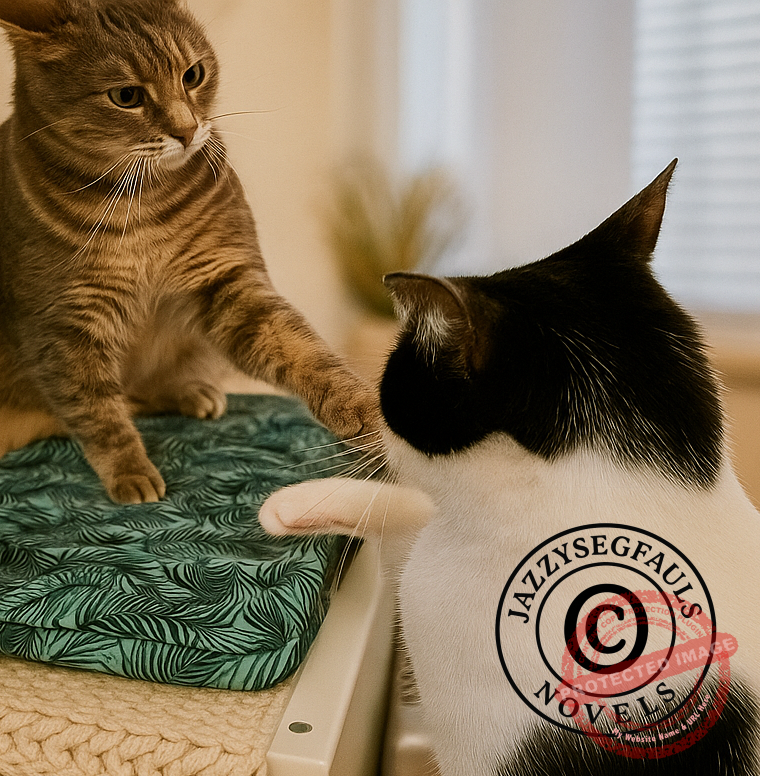
    After sharing so much of my “Glitch,” the heavy spreadsheets of my past, and the deep pits of depression, I decided to seek a different kind of expert opinion. I finally showed this blog to my teenager.

    The feedback? A heavy sigh and a clinical: “Too much drama. It’s cringe. This drama is going to haunt you.”

    In teen-speak, I translated that immediately: “You’re being very vulnerable and passionate here, and I don’t know how to handle this level of intensity on the internet.” And honestly? He’s right. To a generation that uses irony as a bulletproof vest, I’m basically walking around in a neon suit with a target on my back. He’s worried that people will be mean, that the “drama” of my survival will be used against me, and that the blog era I remember, the one where we actually read and felt, is dead and gone.

    Embracing the “Too Much”

    After the deep, raw posts I’ve written this month about my “dark passenger” and rearranging the rooms of my life, this “cringe” verdict felt like a breath of fresh air. It reminded me that while I am a psychologist and a survivor, I am also just a parent making their kid face-palm.

    So, I’ve decided to kill the part of me that cringes, not the part of me that is cringe.

    If being “too much” is my social death sentence, I’ll go out in a blaze of dramatic metaphors and poetic captions. If my journey from the metro station to the therapist’s office, and from Excel sheets to fantasy journals, is “too much drama” for the modern internet, then I accept the title.

    I’ve spent too many years being “numb” and “robotized” to tone myself down now. If I’m not making my kid face-palm at least once a week, am I even doing this parenting thing right?

    A Question for the “Uncool” Crowd:

    After everything I’ve shared about my path, I want to know: Has your child (or the world) ever told you that you’re being “cringe” just for being yourself? Did you tone it down to fit in, or did you lean into your own drama and realize that being “cringe” is actually just another word for being alive?

    This post is my small “respiro”, a reminder that even after the darkest chapters, there is room for a smile and a heavy, teenage sigh.

    Blog Categories*

    Behind the Scenes

    Personal Notes

    The Film Mind

    Explore the archive

    *This blog extends ideas from the novels, reflections, process writing, and lived experience behind the stories.

  • The Birthday Glitch

    It was my birthday recently.

    I never announce the date, but the children I work with always find a way to figure it out. Every year they bring something handmade: drawings, paper creatures, small chaotic masterpieces. Watching them place these little things on my desk made me think about something. It’s so easy for them to give, and yet, for me, receiving has become complicated.

    I’ve always been the person who gives. I learned that early in life: helping, fixing, making sure things are okay. But for a long time, I didn’t believe I deserved to receive anything, not even a celebration for the day I was born.

    The Years of Disappearing

    For most of my life, I didn’t celebrate my birthday. I think the only time it felt “normal” was when I was 14; a cousin’s mother brought two cakes because my cousin and I share the same birthday. Other than that, my tradition was to disappear. I would leave the house early in the morning and come back late at night, just so no one could celebrate me. I would walk for hours, go to a movie alone, or eat by myself just to make the day pass. Just one more day to get through. Maybe that’s why I always lose track of my age, because I spent so many years trying to ignore the count.

    Even after I entered a stable relationship, I celebrated my partner and my mother-in-law, but never myself. When my children came, we started having simple family celebrations with a cake, and that was it. To be honest, I’ve always felt that I’d rather go to a funeral than a birthday party; my sister always loved the big parties and the fast-paced celebrations, but they never tempted me.

    One More Marble in the Jar

    But in recent years, something has shifted. We’ve created a small, quiet tradition. We gather as a family, we talk, and we eat cake together. It’s simple, but it’s real.

    For a long time, I didn’t think I “deserved” a birthday because I felt I hadn’t done anything to earn it. Now, I no longer feel guilty for having lived another year. Instead of a burden, I see it as adding another marble to the jar of my life. I celebrate it with a cake and my own family, simple and beautiful. For me, that is enough.

    Finding the Others

    Maybe that’s also why I’m here, writing this.

    I originally installed Instagram when I started my blog because I wanted to create connections through my books. But once I finished, I didn’t really feel the need to use the app anymore. Then, I wrote that post about buying twenty old books, and something shifted. Suddenly, I felt a spark of wanting to find people like me: the quiet ones, the observers, the ones who build meaning slowly.

    And slowly, I’ve started to notice them. The person who wrote about always being the “good daughter.” The one who felt completely shattered after losing a small animal that meant the world to them. The writer who said it’s hard to promote their own book because they are deeply introverted. The artist whose portraits make you feel like the eyes in the painting are looking right back at you.

    I recognized something familiar in all of them.

    The Choice to Stay (On My Own Terms)

    A while ago, I wrote that post about the twenty books in an impulsive moment. The truth is, that day my phone actually suggested deleting apps I wasn’t using anymore. Instagram was one of them. For a second, I almost did it. I almost deleted my digital presence and disappeared again.

    Because I don’t have much experience with social media, I didn’t realize at first what Instagram really was. I eventually found people worth talking to, but I couldn’t ignore how commercial and shallow the platform felt. It’s a world of “scroll and doom,” and it didn’t fit the space I was trying to build.

    So, instead of disappearing, I chose a different path. I cleared my information, and moved my focus to my blog and Substack.

    Which, honestly, is the most accurate summary of my personality: almost deleting my digital life, refusing the commercial noise, and accidentally buying twenty physical books instead.

    Another year of existence added to the list. I am finally opening the doors to the rooms of my life and letting the light in. So far, it seems… sufficient.

    Blog Categories*

    Behind the Scenes

    Personal Notes

    The Film Mind

    Explore the archive

    *This blog extends ideas from the novels, reflections, process writing, and lived experience behind the stories.

  • The Road Back to the House of My Life: Beyond the Myth of “Laziness”

    A Reflection on Depression, Therapy, and the Art of Rearranging the Past

    A Note Before You Read

    Content Warning: The following text discusses experiences with depression and past suicide attempts. Please prioritize your emotional safety and read only if you feel grounded enough to do so.

    The journey I have traveled so far is what allows me to write today about the events of my life. For many who haven’t experienced what depression truly means, there is a common misconception: that people with depression are simply “lazy.”

    The Ghost of “Laziness”

    Until I began to study depression myself, I believed this lie. I thought I was lazy. I thought it was all “just in my head.” I believed that the struggle to wash the dishes, to do the laundry, or sometimes even to wash myself was because I was a lazy person.

    I thought my constant need to sleep was a character flaw, not realizing that at night, my mind would never stop. It spent those hours analyzing everything I had done that day; convinced I had failed at everything, that I hadn’t spoken correctly to those around me. I was always exhausted, always drained of energy. It felt impossibly heavy even to go out and buy a coffee.

    Facing the Pit

    In 2018, after my second attempt to put a “final period” on the book of my life, I started therapy. That was when I realized that what I thought was laziness was actually a way of “robotizing” my own existence, ignoring what was truly important.

    Yes, I had a purpose: my chosen family, my partner, and my two children, but when you don’t have a purpose of your own and there is a deep pit behind you that you need to climb out of, meaning feels out of reach. My pit was so deep and dark that I didn’t even know what was inside it. When I first started looking into that pit, I didn’t even know what I was seeing. But as I began to unearth what I had buried there, it felt as if something inside me died.

    I realized that beyond the “laziness” was a defense mechanism. I was constantly numb.

    The Pain of Feeling Again

    After about four or five months of therapy, I began to feel again. The pain was so intense that I constantly wanted to retreat back into that numbness. It was too much, and often, I didn’t even know why. But I kept digging into the past, because that is where everything started.

    How did therapy help me? Now that I know how depression and trauma are treated, it seems logical from the outside. But back then, standing in the darkness, nothing made sense. My mind was total chaos, and my memories were a constant source of guilt.

    Healing Through Excel and Fantasy

    My therapist helped me “clean my house.” I loved her approach. She asked me to create lists in Excel (the “death of passion” for many, but for me, a way of life). I made lists of memories, arguments, and details. Then, on my own initiative, I created a PowerPoint presentation once the spreadsheet was finished. She didn’t correct me; she let me present my past the best way I knew how.

    After the presentation, she asked me to start a journal. At that time, creating a “story of my life” was the thing that scared me most. I can make a list, I can put a bow on a presentation, but writing a story? You might as well have asked me to move water from one bucket to another using a pipette.

    But I did what she asked. Since she didn’t specify how to write it, I found a loophole, a “glitch” to escape through. I wrote a story about fairies, werewolves, vampires, demons, and witches. She said write a journal; she didn’t say it had to be literally about me. That journal eventually transformed into books. Later, my psychologist and mentor suggested, as a final wish, that I arrange those journals and put them online, so I wouldn’t have to keep carrying the trauma of those stories alone.

    From Survival to Understanding

    As a psychologist now, I understand the technique. By making the Excel lists and the PowerPoint, I created a timeline and distanced myself from my trauma. By writing the journals and discussing parts of my past, I reinterpreted what happened to me. I realized I couldn’t control what happened, only how I reacted.

    I moved from the fear of teenage anxiety to the depths of depression because, when I lived in fear, my mind protected me by numbing me. The “bad news” was that when I stopped feeling, my mind stopped looking for ways to survive, and survival is the mind’s primary function. When I had no reason to survive, my mind created that voice telling me: “You don’t feel anything anyway, why wait? You’re just taking up a seat on the train for nothing.”

    The House is Open

    Eventually, I reorganized and reinterpreted my past. I saw that even though it was hard, I hadn’t harmed anyone but myself. I realized:

    • My obsession with learning was my way of staying alive.
    • I didn’t abandon my family, even when they hurt me.
    • I found a partner who accepted me exactly as I am, even after seeing my darkest parts.
    • Despite not originally wanting children, I have two healthy kids.
    • I am healthy enough to do what I love: working with children who have dyslexia, creating worksheets for them, and helping them just as I was helped in primary school.

    It was hard, but I found the way back to the “house of my life.” After opening all the rooms and letting the air in, they began to rearrange themselves. Now, I feel good every time I walk inside each room.

    Global Resources for Support and Healing

    If you or someone you know is struggling with abuse or mental health challenges, please reach out to these free, confidential, and professional services:

    The National Domestic Violence Hotline (Global Access) While based in the US, their website offers extensive safety planning tools, educational articles, and a 24/7 chat service that can guide survivors globally on how to stay safe.

    Chayn An award-winning global platform that provides multilingual resources, guides, and online courses for survivors of abuse. Their Global Directory helps you find local support services in almost any country.

    7 Cups A mental health ecosystem providing 24/7 free emotional support. You can chat anonymously with trained “listeners” or join support groups for trauma, anxiety, and depression.

    Find A Helpline A comprehensive global tool that connects you to over 1,600 free and confidential helplines worldwide. You can filter by country and the specific issue you are facing (abuse, suicide prevention, etc.).

    Bright Sky App A free mobile app (available in many countries, including Romania) that provides information on domestic abuse and a secure directory of specialist support services. It includes a “Journal” feature to safely record incidents of abuse.

    Befrienders Worldwide A global network of centers providing confidential emotional support to people in crisis or experiencing suicidal thoughts. They offer a safe space to be heard without judgment.

    Blue Knot Foundation A leading organization specialized in Complex Trauma (CPTSD). They provide extensive educational resources and support specifically for adult survivors of childhood trauma.

    Blog Categories*

    Behind the Scenes

    Personal Notes

    The Film Mind

    Explore the archive

    *This blog extends ideas from the novels, reflections, process writing, and lived experience behind the stories.

  • The Anatomy of the Nut

    Anxiety, Depression, and the Roots of the Glitch

    A Note Before You Read

    After my last post reviewing After.Life (2009) and my reflection on depression and my second suicide attempt seven years ago, I want to offer more context to my experience.

    For years, I fought with myself; not to find a purpose, but to survive. To survive myself. To survive the same numbness that consumes enormous resources. I don’t just mean energy; I mean the resources of the mind: the way I thought, analysed, structured, and processed daily information.

    For me, depression didn’t just appear at 19 or seven years ago; it was the result of anxiety. As I have learned in recent years, anxiety and depression are twin sisters, bound strongly to one another. They cannot live without each other. They are like a nut: on one side is anxiety, and on the other is depression. I ate the anxiety first, and then I reached the depression.

    Everything started in my childhood. Even though I don’t remember much of that early part, my mother’s stories and memories explain what happened. I will begin at the beginning.

    The Fragmented Start

    My mother always told me I was a wanted child, born out of love. However, circumstances forced my parents to send me to my paternal grandparents so they could return to work.

    A few months after my birth (I don’t know exactly how many) I was sent away and cared for by my father’s sister. After a while, I fell ill. My mother always mentioned it was pneumonia and blamed their negligence for me ending up in the hospital. Later, I was sent to my maternal grandparents, where I had a peaceful period. I have photos to prove it: playing in the snow or sitting next to my grandmother while we played together.

    The School of Fear

    When it was time for kindergarten, I was brought back home. According to my mother, it was a difficult time. In that era, children in the school system were punished physically. After seeing that nothing was being done about the violence in the kindergarten, my mother withdrew me before I started primary school.

    This method of punishment wasn’t unique to kindergarten; it was a common practice in the entire system, even in schools. I faced this later myself. If I ask anyone my age, they will tell me the same story: until the 8th grade, we were all pulled by our hair (the sideburns), hit with wooden rulers over our fingers, pulled by our ears, and had chalk thrown at us.

    My generation lived in fear from a very young age. If a teacher complained to our parents, we weren’t afraid of the teacher, we were afraid of our parents. The beating we would get at home made us extremely careful about what we said or did.

    Because of this, we were like animals in a jungle. The strongest was the most resilient and the one who studied best. Often, the top students were the meanest because they had the protection of the teachers (who would say they were “too good” to do anything bad).

    Parents were put in a difficult position: “Either you keep your child in check, or we, the education system, will.” My mother told my father that from the 5th grade, I had poor results in my native language grammar and mathematics. I had huge problems, especially in the 5th grade, where I was close to failing. But before my mother could intervene, I solved it myself. I discovered that if I answered orally during class and went to the blackboard to solve exercises, I could fix my grades, because written tests disadvantaged me.

    The Stigma and the Shield

    Regarding my family situation, my father hit my mother immediately after I was born, which is why I was sent to my grandparents. My mother was dragged into a scandal that followed her for a long time. After my birth, her older sister’s husband tried to convince her to have a sexual relationship with him, arguing that since she was married now, whatever happened didn’t matter. (To be clear, this uncle is the only one in my entire extended family who went to prison, and at that time, he had just been released).

    My mother told her sister and my father, but no one believed her, even though she refused him and nothing happened. She carried that stigma for life. I only found out this story a few years ago when I confronted her about why she never left my father. These two factors, the school system and what happened to her, made her hide nothing from my father, out of fear that it would always be turned against her.

    Yes, I was beaten from the 5th to the 8th grade because of my grades. I know it is wrong, but I do not accuse them, nor do I excuse them. I am only offering an explanation for context, but as a psychologist and as the child I once was, I now acknowledge that no amount of cultural context justifies the pain of those years. Understanding why it happened doesn’t take away the fact that it shouldn’t have happened.

    The Turning Point at 14

    After an event when I was 14, in the 8th grade, everything changed. (I am not writing about it yet because I cannot; I don’t know when I will be ready. I am honouring that part of my journey by keeping its silence until it feels ready to be shared).

    My father told me about his own childhood. Among his siblings (he has a twin brother and two other younger twin siblings, a girl and a boy, none of whom are identical twins), he was always the one sent to do everything in the household. Although he was the most fragile at birth (confirmed by my grandmother, who is still upset when talking about how she had to stay in the hospital with him for two months), he grew up to be the tallest and physically strongest.

    Because of this, he became what we call in my country a “workhorse.” He still is; nothing has changed. He always helps his parents and siblings. He never knew how to stop working, and I don’t think he ever will. He told me how, when he worked at a glass factory, he hand-made two ornaments for his mother. She told him that others brought her honour, fame, and money, while he only brought her “decorations.” Those two glass decorations sat on my grandparents’ TV until I was 20, when I consciously smashed them and claimed it was an accident.

    My father was never appreciated by his family, and he still isn’t. He is a man who has worked and will work until he dies because he knows nothing else, and he is good at what he is doing; he is a mechanical engineer(he can fix an entire assembly line in a factory or demolish an entire building, by himself). He is a fixer, and I admire his skill, but I have also learned that not everything can be fixed with manual labour; some things, like the wounds of the mind, require the courage to stop working and start feeling. This does not excuse his violence toward my mother for all those years. However, after that event when I was 14, things changed. During his moments of rage, I became my mother’s shield. I would ask him to hit me instead; I would scream at him that if he wanted to hit someone, he had a target right here.

    The violence stopped, but I knew there was a war inside him. My father has green-blue eyes. When he is calm, they are a pleasant green, like a forest meeting the sky. But when he is angry, his eyes turn a white-blue, as if you are looking at two frozen droplets.

    Numbness and Survival

    I tell these stories because they link back to what I said about anxiety and depression. I always lived in fear, and so, at some point, I went numb. I felt nothing. Even if I hit myself, I didn’t feel it. If someone insulted me, I would say: “Is that all you’ve got? Surely you have more to say. Don’t stop, I’m actually enjoying this.” I know these lines because I used them my whole life.

    Fear drove me. And because of that fear I started to gather knowledge like the air I breathe. From the 9th grade, I began reading Freud and The Art of War. I read everything I could get my hands on alongside the economics books for high school. My parents sent me to a private economic high school, even though they had no money, because they wanted to ensure my future so I wouldn’t go through what they did. That is why I always look for knowledge as if my life depends on it.

    I never stopped loving my parents. I always wanted them to find a way to understand each other. For years they lived together but separate: separate rooms, separate lives, separate expenses. I wanted them to find peace. I never stopped visiting them. For years it was once a month; in recent years, it has been once a week.

    The Golden Eyes of Fear: A Confrontation at the Sea

    The road to the peace we have now wasn’t linear. It required a brutal, honest confrontation that happened in 2020, during a family vacation at the seaside. Because both my mother and I are allergic to the sun, we stayed in the hotel room while my father, my partner, and my children were at the beach.

    By then, I had been in therapy for two years. I had reached a point where I finally felt strong enough to demand explanations for how I was treated as a child.

    This was a massive shift; when I started therapy in 2018, I didn’t speak to my parents or my sister for six months. Even after that, I only called them once a month for the next six months. The silence was my only shield.

    As I sat across from her on the sofa, I began to ask the questions I had carried for decades. As I spoke, I watched her body language shift, but mostly, I watched her eyes. My mother has brown eyes with a golden tint in the center. I noticed that as her fear grew, the brown receded and the gold expanded; a bright, fiery amber, as if her eyes were turning to liquid gold. Her pupils became tiny pinpricks of light.

    She was terrified that I was about to disappear again.

    When I finished, she sat in silence for several long minutes, blinking rapidly as her pupils finally dilated to their maximum. She admitted that the year of distance had hurt her more than she wanted to acknowledge. She told me she had spent those two years walking on eggshells, terrified of saying the wrong thing and losing me forever. My father had blamed her for my silence, accusing her of being the reason I walked away.

    But even in that moment of vulnerability, the old patterns remained. She admitted she had never supported my choice to become a nurse. She had always wanted me to be an accountant, her own unfulfilled dream. She believed that “counting money” was the only way to ensure I’d have the resources to eventually study what I wanted. Even my father, couldn’t understand why I was still in school, constantly asking how much longer I intended to keep learning.

    I had to set a final, hard boundary. I walked into the bathroom to breathe, to find my center, and when I came out, I told her:

    “If you want to see us, you must stop criticizing my path. I am not living your dream of being an accountant. I am living mine.”

    That day, I stopped being the child seeking permission and became the adult claiming her own life. It was the first time she truly saw me, not as an extension of her or a vessel for her regrets, but as a person who had survived and evolved.

    The Path to Peace

    Last week, they signed the papers for a house and a piece of land in the countryside. They plan to renovate it for us; me, my sister, and our children. So we have a place to go near the forest.

    I want to be clear that this transformation didn’t happen by a miracle; it was a deliberate process. I have put a lot of work into our relationship in recent years. I finished my Psychology degree in 2023, and since then, I have consistently applied what I’ve learned to our dynamics. That is why I visit every Sunday. I chose to break the cycle. It wasn’t about fixing them; it was about making them talk to each other, it was about facilitating communication, so I can visit and not feel like I am in a war zone. Since it is their responsibility to take the next step alongside us, it was about healing the way I relate to them and establishing boundaries that were never there.

    They don’t fully know what I did for them. But my mother finally realized it and told me this past Christmas: “Don’t think I don’t know what you’ve been doing for a while now.” She thanked me, saying a parent’s duty is to prepare the child for life, not to always stand beside them. She said she was sorry I had a hard childhood, but she did what she could with what she had.

    To end on a happy note: when they told me in January that they were buying a house near my mother parent’s house(where my mother’s brother live, her childhood house) and land, I felt a moment of rest. On 29.03.2026 they showed me papers of the house and their both names are on the deed of the house.

    I cried so much that my mother begged me over the phone to stop, saying everything would be fine and that our kids would have a place for their summer vacation. Through her own tears, she told me her plans. I cried not because the house fixes the past, but because it felt like the weight of my parents’ lifelong war was finally being put down. It was a release of a burden that wasn’t mine to carry, but which I felt every day of my childhood.

    I don’t write this to excuse my parents’ behavior or to say hitting a child is normal. Far from it. I have never raised my hand against anyone in my life; in fact, I always turned the other cheek and dared them to hit me again.

    But they taught me:

    • Life is unfair, and I do what I can with what is put in my path.
    • Work is the most important thing; as long as I have hands and feet and I am healthy, I can work, but I’ve also learned to rest, to take frequent vacations when I need a reset, and to find passions that truly fuel me.
    • Family is a complex system where everyone fights their own battle; we can offer support, but solidarity must never come at the cost of my own psychological integrity or the blurring of my individual boundaries.
    • Whatever I do, there is no “I can’t,” only “I won’t.”
    • If not me, then who?
    • Get up from the ground even if I can’t. As long as I breathe, it means I still can. Every day is a new battle, but also a new adventure where I discover who I am and where I want to go.
    • Life is a lady of easy virtue who sells you happiness by the gram, so don’t go looking for it. Happiness doesn’t exist; I create it in small and simple moments that allow me to see myself as a whole. I am no longer a collection of broken pieces that I must glue back together at the end of the day just to earn a reward. Instead, I live my life one day at a time, as a new adventure that offers me small joys.
    • I learned that ‘I can’t’ is sometimes a necessary boundary, not a failure.
    • I learned that while my parents did their best with what they had, I am allowed to want, and create, something better and gentler for myself.

    I have seen their mistakes, I see their efforts, and I accept them as they are. But I no longer carry their burden.

    While I share my story to offer perspective, please remember that every healing path is individual. If you find yourself in a similar situation, I strongly encourage you to reach out for professional support.

    Global Resources for Support and Healing

    If you or someone you know is struggling with abuse or mental health challenges, please reach out to these free, confidential, and professional services:

    The National Domestic Violence Hotline (Global Access) While based in the US, their website offers extensive safety planning tools, educational articles, and a 24/7 chat service that can guide survivors globally on how to stay safe.

    Chayn An award-winning global platform that provides multilingual resources, guides, and online courses for survivors of abuse. Their Global Directory helps you find local support services in almost any country.

    7 Cups A mental health ecosystem providing 24/7 free emotional support. You can chat anonymously with trained “listeners” or join support groups for trauma, anxiety, and depression.

    Find A Helpline A comprehensive global tool that connects you to over 1,600 free and confidential helplines worldwide. You can filter by country and the specific issue you are facing (abuse, suicide prevention, etc.).

    Bright Sky App A free mobile app (available in many countries, including Romania) that provides information on domestic abuse and a secure directory of specialist support services. It includes a “Journal” feature to safely record incidents of abuse.

    Befrienders Worldwide A global network of centers providing confidential emotional support to people in crisis or experiencing suicidal thoughts. They offer a safe space to be heard without judgment.

    Blue Knot Foundation A leading organization specialized in Complex Trauma (CPTSD). They provide extensive educational resources and support specifically for adult survivors of childhood trauma.

    Blog Categories*

    Behind the Scenes

    Personal Notes

    The Film Mind

    Explore the archive

    *This blog extends ideas from the novels, reflections, process writing, and lived experience behind the stories.

  • The Anatomy of My Survival

    From the Glitch to the Light

    Content Warning: The following text discusses experiences with depression, past suicide attempts, and domestic violence. Please prioritize your emotional safety and read only if you feel grounded enough to do so.

    A Note Before You Read

    Watching After.Life (2009) was supposed to be just a movie night, but it ended up triggering the raw story of the two times I almost ended my own life.

    I am sharing this story exactly as it flowed out of me. You will find mistakes, but I believe the truth is more important than perfect grammar. This is my raw, unedited journey from the “Glitch” back to life.

    19 Years Old: The Crash and the Ghost of Guilt

    The story begins when I was 19, when I tried to take my life for the first time. It happened after a car accident caused by some reckless kids who didn’t yield or slow down at an intersection. My best friend died at the wheel, and his fiancée was left paralyzed.

    During the accident, I had been sleeping in the back seat because I always experienced motion sickness and would often vomit, so I slept to avoid it. When the bang woke me up, I saw my best friend in a state that made me realize he was gone. My leg was stuck between the seats, but I managed to move closer to his fiancée and talk to her until help arrived.

    The Unveiling: A Childhood of Shadows

    That was the moment when everything from my childhood began to reveal itself. After the accident, I kept returning to memories of my father beating me whenever I got low grades, and of my mother, who would tell on me and manipulate me, saying no one loves you more than your own parents and that “everyone was beaten growing up.”

    My mother repeatedly told me stories of how she used to do childish things when she was a child; like throwing eggs in the yard or giving the milk meant for sale to the cats, and she was beaten by her father for those acts. Similarly, my father, back when he was a child, had always been sent for milk from his grandparents (in the next village) and beaten if he stayed to play football with the other children or didn’t finish his chores by dawn by his father, after being told on by his mother.

    The Gilded Cage: Accounting and “The Beatings for My Own Good”

    During that period, I was working as an assistant manager and testing accounting software for PCs, everything my mother wanted (an accountant “with something extra”). At the same time, I was in my second year at the University of Finance, Banking, and Stock Exchange, which my parents were paying for.

    Before the accident, I had taken the entrance exam for Veterinary Medicine after a year of studying on my own. When I announced that I wanted to drop out of Finance, my father beat me until I peed myself. My mother reproached me, saying they had done so much for me and that I was the most ungrateful person on earth.

    The First Attempt: The Hotel Room

    All of this pushed me toward the decision to end everything the only way I thought possible at that moment. I obtained two bottles of sleeping pills, booked a hotel room, and prepared to do it.

    I went into the bathroom and sat down on the floor. I took the pills, but something shifted in my mind after swallowing both bottles and being ready to down a bottle of tequila. I began thinking about the person who would find me, and how much trouble I would cause for those who would have to justify what I had done. So I forced myself to vomit until I felt like fainting.

    I woke up covered in vomit, though I was sure I had reached the toilet. I cleaned up the bathroom, washed myself, washed my clothes, dried them with a hairdryer, and left.

    The Descent: Addiction and the Search for Feeling

    But the feeling didn’t go away, so I waited for the moment when I would find the most efficient method to finish what I had planned. I got a tattoo (my only tattoo): a dreamcatcher shaped like a flower with thorns and a butterfly, on my right thigh as a tribute to my lost friend. This tattoo also covers my appendectomy scar. It’s a site that holds a heavy memory: the night I was operated on, my mother didn’t believe I was truly ill until I collapsed at the foot of my parents’ bed. I remember being rushed straight into surgery upon arriving at the hospital, only to find out later that my appendix was on the verge of rupturing.

    For a year, I thought about how and when to do it, but every time I looked at the tattoo, I remembered how much he mattered and how unfair it felt that he was gone while I was still here, breathing.

    This is where the first crack in my “accountant façade” appeared: I started my sexual life and became addicted to sex just to feel something, though many times it didn’t help. I had relationships that lasted no more than three months, and they weren’t really relationships, just sex, with either women or men. It didn’t matter.

    A Glimmer of Hope: The Camera and the Great Change

    During one of my escapes, I met a photographer. I had always liked photography and played with his cameras whenever we met. When he saw what I could do, he suggested I try this path. That was the first thing that saved me; I dropped out of university and left my assistant manager job.

    Years later, another turning point came, seven years ago, when something happened to my oldest child at kindergarten that shook me deeply. I started drinking daily just to cope and hide the fact that I felt like disappearing again, because I couldn’t protect what was most precious to me.

    The Metro Station: The Mind’s Savior

    I remember it vividly: I was at home with the two children when I picked up the phone, called my partner, and said I was leaving because I couldn’t take it anymore. I felt I had no reason to live.

    I hung up, put the phone in my pocket, took my wallet, and left the house. I don’t remember much from that walk. I walked until I sat on a bench and felt the urge to smoke. I had smoked from age 15 to 25 until we decided to have children, but that day, I desperately wanted a cigarette. So I bought a pack and a coffee, I smoked until I felt dizzy, and finished the drink.

    When I finally checked my phone, I saw missed calls and messages from my partner: “I am coming home”, “I called your mother to stay with the kids”, “Whatever happens, you are not alone, you have a place to return to”. Over the years those three messages became my anchor.

    I kept walking until I reached the metro station. I paid for the ticket, entered, and sat on a bench on the platform. I wasn’t thinking; I was just waiting for the train.

    The first train passed. I watched its speed, its stops, where people got on, and which door was most crowded.

    The second train passed, and I realized I should stand near the entrance. I wanted to get up, but a little girl sat next to me and showed me her doll. Her mother said the grandmother had given it to her. The girl talked, the mother added details, and their story caught me.

    I asked, “Do you like the doll because you wanted one, or because your grandmother gave it to you?”

    She said her grandmother had made it, and that she was sick.

    And then, without a word, I got up and left. I still don’t know why. Not even therapy has given me the answer.

    The Reality of the “Glitch”: The Fabricated Escape

    I walked home, went to the bedroom, lay down, and fell asleep. I don’t remember anything after that. I only know I began individual and couple’s therapy. That’s when I started writing those journals that eventually became books because writing what I truly felt was too much, too raw. At that moment, I was reading dark fantasy, and that’s why I started writing those journals as dark fantasy; it gave me a safe place to feel without collapsing.

    The strangest part came when my therapist told me the truth about “the day”: there had been no little girl at the station. Every time she asked about her, the details changed. Sometimes it was a girl, sometimes a boy whose mother was lost when the metro doors closed. Sometimes it was my partner telling me to come home. Sometimes it was my children asking me to watch their favourite movie or play a game.

    My mind had created someone, anyone, to bring me back when I was too numb to live.

    Today: The Healer Who Survived

    And today, I am here, able to write this. Even if no one had pulled me back from the edge, my survival instinct did. We are genetically programmed to survive, is in our DNA.

    I survived my “dark passenger,” but not alone. I had professional help, my chosen family, and my partner’s mother. I found my reason to live when, after therapy, I enrolled in nursing college. I was finally doing what I always wanted, to become a healer. Not a veterinarian, as I had dreamed as a child, but someone who repairs wounds in people.

    Later, after only six months working as a nurse, my right hand failed me. But I had already discovered psychology during the pandemic, so while I was in my third year of nursing college, I began my first year of psychology.

    And that led me to today, appreciating the life I have. I will never try to stop this journey again. My choices are mine, my path is mine, and I walk it consciously.

    What saved me was finding my purpose. I had many jobs in my life, but I didn’t give up. Jobs aren’t permanent, they helped me discover what I truly want. It’s like trying different cakes until I found my favorite.

    Disclaimer

    I am dyslexic, and I have chosen not to use Grammarly or Word editors. If there are mistakes, they don’t matter. What matters is that I can leave a trace on the internet for someone who might need it, someone who feels alone.

    Please remember: there is always someone by your side. Maybe not someone close, but specialized help exists for those moments when you feel like ending your life.

    You are not alone in the “Glitch.”

    Resources for those in the “Glitch”:

    ​If you feel like you are at the edge, please remember that help is available globally.

    You don’t have to carry this burden alone.

    Global Resources for Support and Healing

    If you or someone you know is struggling with abuse or mental health challenges, please reach out to these free, confidential, and professional services:

    The National Domestic Violence Hotline (Global Access) While based in the US, their website offers extensive safety planning tools, educational articles, and a 24/7 chat service that can guide survivors globally on how to stay safe.

    Chayn An award-winning global platform that provides multilingual resources, guides, and online courses for survivors of abuse. Their Global Directory helps you find local support services in almost any country.

    7 Cups A mental health ecosystem providing 24/7 free emotional support. You can chat anonymously with trained “listeners” or join support groups for trauma, anxiety, and depression.

    Find A Helpline A comprehensive global tool that connects you to over 1,600 free and confidential helplines worldwide. You can filter by country and the specific issue you are facing (abuse, suicide prevention, etc.).

    Bright Sky App A free mobile app (available in many countries, including Romania) that provides information on domestic abuse and a secure directory of specialist support services. It includes a “Journal” feature to safely record incidents of abuse.

    Befrienders Worldwide A global network of centers providing confidential emotional support to people in crisis or experiencing suicidal thoughts. They offer a safe space to be heard without judgment.

    Blue Knot Foundation A leading organization specialized in Complex Trauma (CPTSD). They provide extensive educational resources and support specifically for adult survivors of childhood trauma.

    Blog Categories*

    Behind the Scenes

    Personal Notes

    The Film Mind

    Explore the archive

    *This blog extends ideas from the novels, reflections, process writing, and lived experience behind the stories.

  • The Itch Glitch

    My fingers are itching.

    I just found out I can play a new character up to level 20 for free in WoW, and my inner gamer is screaming, mostly because I know if I buy a subscription, I won’t be able to stop. It’s a dangerous discovery, especially now, right in the middle of my dissertation.

    Long ago, I was a games tester and a photographer. That is how I met my special someone, during a lunch break. We talked about what games we played outside of work. At the time, the only game I played was Age of Empires.

    My identity as an online player began in 2006 with the username HoneyBunny (inspired by Bugs Bunny cartoons) when I started playing WoW. It eventually transformed into JazzySegfault when I bought an Xbox, a name I still use today in Age of Empires and Fortnite.

    However, I ran into a classic gaming dilemma in Overwatch. It felt a bit ridiculous to see “HoneyBunny” pop up on the kill feed every time I died, so I decided to sync my identity. But since “JazzySegfault” was one character too long for the limit in the Battle.net account settings, I had to drop a “z” to make it fit.
    Even the name Aistriana, from my books, evolved years ago from a Pandaren character. Before her, there were Ashlia, Aistri, Aisis(renamed Joséphine), and now Aisias.

    Now, the temptation is real. Do I focus on the “real-world” requirements of my master degree, or do I take a 20-level break in Azeroth?

    Therapy taught me about intentional movement, but I’m pretty sure my therapist/mentor didn’t mean “teleporting to a new realm” as a study break.

    If you want to see the actual “glitch” in the system (or just check if I’m actually studying or secretly grinding for XP), you can find my gaming footprint here: https://xboxgamertag.com/search/JazzySegfault

    Do you use gaming as a bridge to your kids’ world, or is it your secret escape? What are you currently playing together (or against each other)?

    Tell me I’m not the only one whose dissertation is being threatened by a game.

    The Fortnite Time Glitch

    Today, as I am playing Fortnite with my family, and I remember “The Fortnite Verification Incident” from the pandemic like it was yesterday.

    We were in Creative Mode: a full lobby of eight, including me, my partner, our two kids, and four of their classmates. As soon as we loaded in, the game split us into two squads of four for some 4v4 practice.

    After a few rounds, through the comms, we heard one of the other parents scolding his kid for “playing with strangers.”

    Our youngest tried to explain: “But these are my parents!”

    The parent didn’t believe him. He thought he was partying up with randoms and insisted he log off. It got so serious that we actually had to jump on a call to prove our identity before he was allowed to stay in the match with us.

    Then the next Monday, the online class was restless because of our “appearance.” We felt quite guilty for disrupting the teacher’s hard work, so we had to step in and apologize through a deal with the kids: we promised to play with them every Sunday, if they promised to stay quiet and let the teacher finish her lessons in peace.

    That “deal” ended up lasting throughout the entire pandemic. Every single Sunday, no matter how tired we were, we logged on to keep our end of the bargain. That’s why now I am very careful what promises I make to kids.

    It was a lesson for us, too. Being a “responsible adult” sometimes means fixing the digital chaos you accidentally started.

    Also we still have weekend play day with our kids.

    Blog Categories*

    Behind the Scenes

    Personal Notes

    The Film Mind

    Explore the archive

    *This blog extends ideas from the novels, reflections, process writing, and lived experience behind the stories.

  • The Dissertation Diaries Glitch: A Masterclass in Irony

    I am currently in a committed, toxic relationship with my dissertation.

    I’ve finished 2 chapters out of 4 of where the “scientific research” lives. You’d think I’m halfway there, but Chapter 3 is basically a digital cemetery where my brain cells go to die.

    To write these chapters, I have to digest 20 scientific articles and at least 5 heavy books, which I need to analyse and categorize from my own perspective while strictly maintaining the scientific facts. Reading a novel is a poetic journey; reading a scientific paper is like fingernails on a blackboard (the old ones where teachers used chalk) while someone screams the alphabet in Sumerian.

    I don’t just “read” an article. I have to haunt it. I re-read the same paragraph four times until the words lose all meaning and start looking like tiny, judgmental insects. I’m fighting my own mind for custody of a single coherent thought, and honestly? My mind is winning.

    I’m a psychologist. I understand how the brain works. And of course, because the universe loves a good joke, I chose to write about the psychopathology of burnout. Why? Because back in 2023, I lived it. I went through a burnout so severe it reshaped my world, and I chose this topic because I wanted to dismantle the monster that tried to undo me.

    So here I am, analysing the mechanics of exhaustion while my own nervous system is playing circus music in the background. I’m staring at data about burnout until I’ve practically become the case study again.

    I wanted to finish the research part of my paper by now; instead, I’m just waiting for Chapter 3 to apologize for existing.

    Whenever I catch myself staring into space, I’m not “reflecting.” I’m just checking if I’ve reached the “depersonalization” stage of my own thesis.

    Blog Categories*

    Behind the Scenes

    Personal Notes

    The Film Mind

    Explore the archive

    *This blog extends ideas from the novels, reflections, process writing, and lived experience behind the stories.

  • Why this Blog even exists

    In our house, we aren’t “social media people.” We’ve seen where it’s gone lately, and we usually stay away. I use YouTube for actual useful information(and the occasional cat short, obviously), and Pinterest for finding worksheets and ideas for the kids I work with.

    But there’s a reason I’m here now, and it’s buried in a memory from a therapy session. I remember talking to my therapist(my friend and my mentor) about an essay I had to write. I had chosen a quote by Aristotle: “Humans are by nature social animals.

    I used to joke with her about it all the time. I remember one time I told her, “Then, why do I feel like a stray cat in a dark alley living next to a dumpster?” We would have these long, deep conversations about what it actually means to be “social.” She used to say that being a “social animaldoesn’t mean you have to be at a party. It means not feeling that you are alone.

    So, I made this blog. I want to show you the “glitch.” I want to show you that whether you smuggle books, struggle with the world, or use art and stories to sit with the dark, you are not alone.

    I’ve also reactivated my Instagram account and later linked it to Threads. But I’ll be honest, the first few days there were a glitch of their own. For nearly a week, my feed was a parade of indecent poses and noise that made me want to delete the app instantly. Then, slowly, the algorithm finally “learned” my heart.

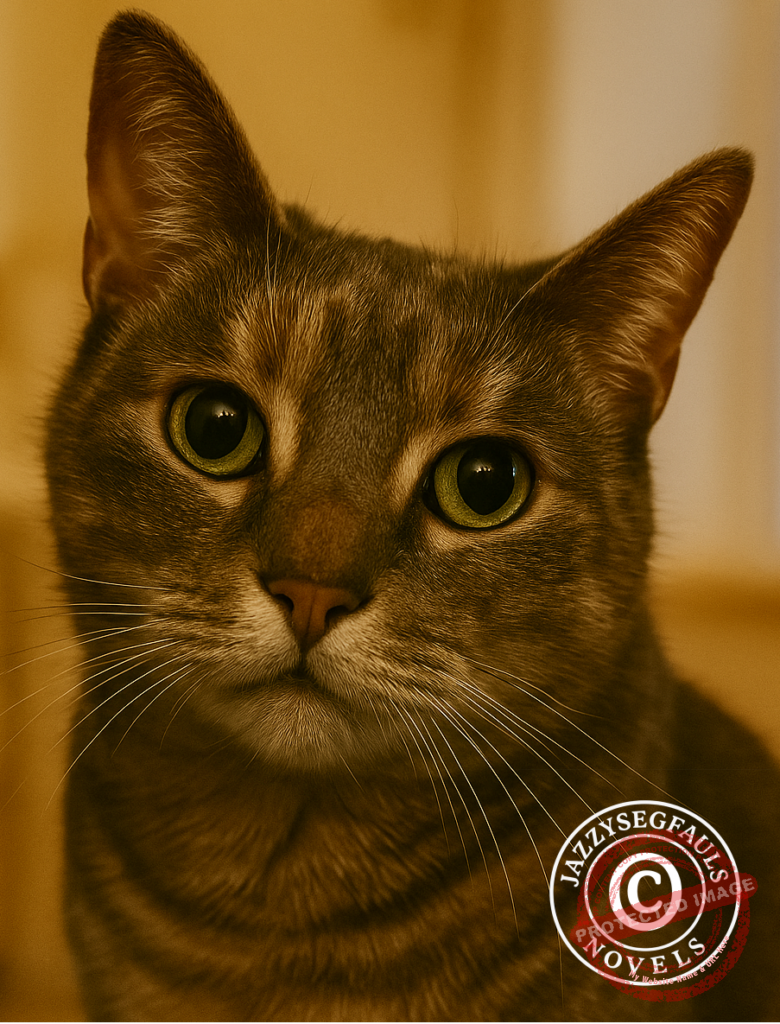
    Now, my feed looks like home: it’s filled with artists, quiet writers, people rebuilding their lives after trauma, and an endless stream of cats that actually help my nervous system settle. I finally found my corner of the alley.

    I’m here because of that joke about Aristotle. And because we are social animals, after all, we just need to find the right pack.

    Credits:
    • Slide 1: Aristotle bust (Public Domain/Archives)
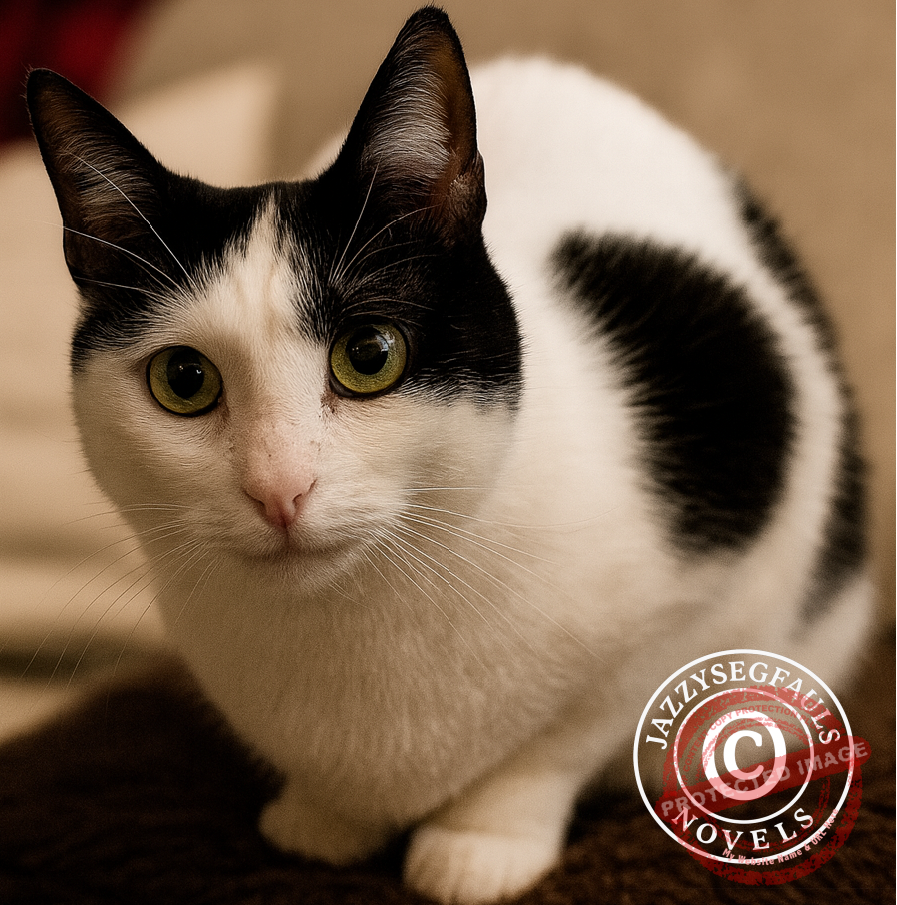
    • Slide 2: My stray-at-heart, Puffy
    • Slide 3: Cover of my 2026 desk calendar

    Blog Categories*

    Behind the Scenes

    Personal Notes

    The Film Mind

    Explore the archive

    *This blog extends ideas from the novels, reflections, process writing, and lived experience behind the stories.

  • The 4 AM Secret is Finally Out

    It’s been over a week since I bought those 20 books, and my conscience finally won. Every night since that day, I’ve been waking up around 4 AM, unable to sleep because the secret was weighing on me. I spent those quiet hours reading, but the guilt was exhausting.

    So, I staged my confession: The Double Frappé Peace Offering.

    In the car, I handed over the drink with my best “innocent” face. The questions were rapid-fire:

    “How many this time?” and “Where are you going to nestle these new little soul-sparks?”

    I took a long sip of my drink.

    “I’ll keep them at the office! I’ll just bring one home at a time…”

    Then came the laugh.

    Are you wondering how I knew about your little quiet huddle?” came the reply.

    “You only wake up that early to work, and I heard you rustling through your nightstand every single night. I was just waiting for you to tell me.”

    My partner already knew.

    The dam finally broke. I finally showed my Instagram and my website. My partner already knew they existed, but I hadn’t been ready to actually show them yet. And honestly, I wasn’t ready for the weight of that encouragement yet. I needed to let this grow in the quiet for a bit, to make sure I was standing on my own feet before letting my partner in crime in.

    But as we drove, the conversation shifted. I said: “I want to build a little library at the entrance with three shelves: ‘Adopt Me,’ ‘Switch Me,’ and ‘Borrow Me.’“

    Right now, I share a workspace, so I can’t make changes yet. But I’ve decided: this will be my very first project when I have my own private practice.

    In the end, it wasn’t just about the books. It was about finally deciding to be unapologetically myself. And my partner is just happy I found my voice.

    These are my original sketches. I used a digital tool, created by my partner in crime, to finish my new Quietling, acting as a creative prosthesis. For me, this process is a form of healing, not artistic performance.

    Blog Categories*

    Behind the Scenes

    Personal Notes

    The Film Mind

    Explore the archive

    *This blog extends ideas from the novels, reflections, process writing, and lived experience behind the stories.

  • The “Support Call” Glitch

    It happened again.

    I called customer service for a technical issue at my office. I explained that, as a psychologist, I needed it fixed immediately to do my job.

    Once the problem was solved, the conversation shifted. The person on the other end started sharing how much therapy had changed his life, how essential it is to have someone to talk to.

    And because of that, if you give me a tiny spark of a human story, I’ll turn it into a bonfire. We talked about anxiety that sparked even deeper, because I’m an anxious-avoidant, and I’m also secretly obsessed with the weight of people’s stories. I can’t help it. And subconsciously, I don’t think I want to.

    Today, for the first time, I felt this magnetic pull to share a moment like this here. I realized that maybe someone out there needs a story that feels like sitting down for a coffee or a tea together.

    If you’ve ever been “on hold” for 40 minutes, it’s probably because of people like me turning a resolved ticket into a deep conversation. My apologies. I worked in debt collection during my accounting days, I know the struggle.

    P.S. The image? It’s what my colleague sent me to lure me out for coffee right after the call.

    Blog Categories*

    Behind the Scenes

    Personal Notes

    The Film Mind

    Explore the archive

    *This blog extends ideas from the novels, reflections, process writing, and lived experience behind the stories.