20th+ Time Watching
THE FILM MIND: The Anatomy of the Emotional Engine
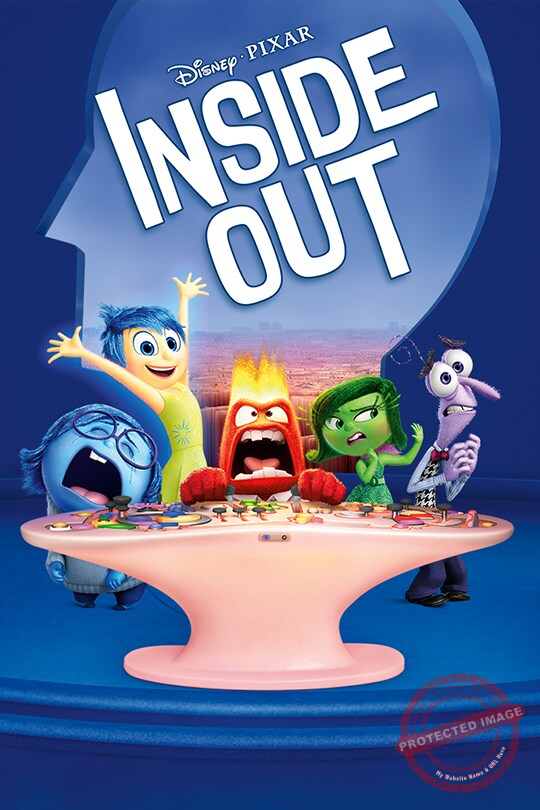
I have probably watched Inside Out more than twenty times. As a psychologist, I don’t see it as a children’s movie anymore; I see it as a technical manual for the human psyche. While it is the most recommended film by therapists worldwide, I want to look past the “colourful characters” and straight into the gears of the Glitch.
Sadness: The Processor of Anxiety
In my clinical view, the film’s most profound revelation is that Sadness is the one who actually processes anxiety. Without her, Joy is nothing more than a curtain, a fragile veil we use to hide the trembling shadow of our fears.
When we try to force Joy to lead every moment, we aren’t being “positive;” we are simply bypassing the necessary work of the mind. Anxiety thrives in the space where we refuse to let Sadness touch our memories. It is only when Sadness is allowed to take the controls that the high-voltage of anxiety can be grounded and transformed into something we can actually carry.
The Birth of Numbness (The Necessity of Depression)
Although it’s a movie for children, Inside Out depicts the beginning of depression with terrifying accuracy. It doesn’t appear as a choice, but as a necessity.
When the “Control Console” goes dark and Riley stops feeling anything, that is the mind’s ultimate defence mechanism. It is the Freeze Response in digital form. When the mechanisms of processing, analysing, and creating alternative scenarios are overwhelmed, the mind switches from “Living Mode” to “Survival Mode.”
Depression, in this context, is the mind pulling the master breaker to protect the mind from shattering under a pressure it cannot yet name. It is the “Grey Shadow” that falls when we lose the ability to bridge our internal world with our external reality.
The Dopamine Trap
When Joy is exiled or forced to perform within a system dominated by fear, she risks becoming desperate. In the absence of true processing through Sadness, “Joy” can mutate into a compulsive search for dopamine, whether we are talking about the “small” escapes like smoking a cigarette, or the darker spirals of sex addiction and hard drugs. It is a frantic attempt to fill a void that the “grey console” can no longer process. For me, it manifests as that urgent, almost clinical need to compulsively buy books I don’t have space for; for others, it is a way to force the engine to start when the mind has gone cold.
Why Every Psychologist Recommends It
If you ask any psychologist on the face of the earth why they recommend Inside Out, they will give you a list of praises. And they are right.
The film validates a truth we often try to ignore: all emotions are functional. * Anger guards our boundaries.
- Fear calculates our safety.
- Disgust protects our integrity.
- But Sadness? Sadness is the anchor.
It is the only emotion capable of signalling for help and the only one that can reintegrate a fractured identity. It teaches children (and the exhausted adults watching with them) that you don’t recover by “thinking happy thoughts.” You recover by letting the blue character take the wheel when the world gets too heavy.
Conclusion: After 20 viewings, the “glitch” remains the same: we are terrified of being sad, yet it is the only thing that actually saves us from staying numb forever.
A Personal Reflection: The Blue Puppet in Charge
Watching Inside Out for the 20th-something time, I’ve come to realize that my own “Joy” character retired sometime in my early childhood. Later she was replaced by a highly caffeinated version of Fear and a Sadness that looks suspiciously like a clinical psychologist holding a clipboard.
Looking back at my post from yesterday (the “nut” of anxiety and depression) I see Riley’s control console as my own childhood living room. When I decided to become my mother’s shield at 14, I didn’t just “step up”; I effectively evicted Joy from headquarters and installed a 24/7 surveillance system. I became the Architect of Numbness.
If you had asked my 14-year-old self who was at the controls, I would have said: “Nobody. I’m just fine.” But that’s the ultimate “glitch,” isn’t it? When the console goes grey and I stopped feeling the hits, I thought I’ve won. I thought I was a stoic warrior. In reality, I was just a blue puppet who had forgotten how to cry because I was too busy calculating the next impact.
My “Personal Numbness” was a survival strategy that only earned me years of chronic fatigue and a “Master’s Degree in Hyper-vigilance” and “Maladaptativ ruminations.”
Now, when I watch this movie with the kids, I have to suppress the urge to shout at the screen: “Let the blue one touch the core memories, Joy!” Sometimes, my version of Joy tries to take the wheel, but she’s out of practice and usually just ends up buying twenty more books I don’t have space for. Apparently, for a compensated dyslexic with an anxious-avoidant attachment style, “Joy” isn’t a bright yellow glow, it’s just the quiet satisfaction of knowing that today, the console didn’t go dark.
I spent my childhood being beaten for my “hardware” issues while my “software” was literally trying to save my life. If Inside Out taught me anything, it’s that my “glitch” isn’t a defect, it’s the only part of me that was ever truly honest.
Blog Categories*
*This blog extends ideas from the novels, reflections, process writing, and lived experience behind the stories.
Leave a Reply