
BOOK GIVEAWAY: As part of my ongoing series supporting indie authors, I am giving away 3 eBook copies of JS Hyder books to 3 lucky readers!
Here is how to participate in the giveaway:
- Follow the Author: Show them some love on their social media (links provided at the end of this post).
- Leave a Comment: Read the interview and tell us:
Which question in the interview made you want to read the author’s book/books?
A small favor to ask:
If you are one of the lucky winners, leaving a short, honest review on Amazon or/and Goodreads once you finish reading would mean the world to the author. It is completely optional and never required, but as indie writers know, even a quick two-sentence review helps a book immensely!
About the author
Meet JS Hyder: an artist, poet, and indie fantasy author from the UK who believes in the magic of old-school portal fantasy, authentic human creativity, and a well-earned Happily Ever After. As the mind behind The A’dara Series, she blends folklore, sci-fi, and heartfelt romance into immersive worlds built for readers who never really stopped looking for the back of the wardrobe. When she isn’t sketching maps, rewatching Dune, or writing poetry with a gothic edge, she’s out in nature hunting for glimmers or navigating daily life with dry British wit, her husband, and her cats.
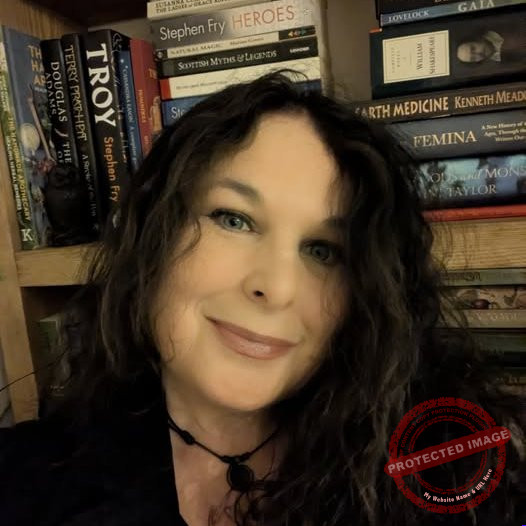
Interview Questions
- 1. For many readers, a great book isn’t just about words on a page; it’s a full sensory experience. If your book/books were a physical element (a specific weather, a texture, or a taste), what would it feel like?
An element is an interesting thought. Sadly, chemistry was not my strongest subject, but I’d like to think of it as a chemical reaction, especially with the romantic entanglement. I think the A’dara series would definitely be one of those volatile chemical reactions, something that seems stable and calm before other elements are added, making an explosive reaction. I feel that sums up the reading experience as you follow Dee: it starts cosy and calm and builds into one dramatic and explosive ending.
- 2. Many readers experience stories as vivid movies playing out in their heads rather than linear sentences. When you write, do you see the scenes unfolding visually first, or do you hear the characters’ voices?
It’s actually both. A’dara began as a means to help me sleep. I worked shifts and had terrible insomnia, so I’d play out the daydream in my head, letting the story unfold in a semi-unconscious way. The characters created the world; their voices and actions felt real, like watching a movie or play. I was very immersed, and every night I would pick up the story where I’d left off. I don’t think it was maladaptive daydreaming, but it was a great way to relax. The story I finally got the chance to write down was only slightly changed from the original (a very different ending), but writing new tie-in chapters, knowing where it had to go, was often difficult when the characters took over the actions again, the scene playing as I typed and their voices echoing in my mind.
- 3. Every book has hidden patterns, subtle details, or background elements that most people miss on a first read. What is one tiny, easily overlooked detail in your book/books that holds a massive secret meaning for you?
While working on a chapter where Dee discovers the library in the dragon’s palace, I lost my cat Max; she lost weight rapidly, and I was told it was cancer, so we had to say goodbye. I’m still welling up typing this, as it was so sudden and out of the blue. She was only 12. I wrote her into my story; she is only mentioned a few times, but I wanted her to always be a part of that world, forever in a magical time-locked palace.
- 4. Years from now, a reader might forget the exact plot points or character names, but they’ll remember how your book/books made them feel. What is the single emotional residue you want left behind in their mind?
Honestly, I’d love for them to always remember rich characters and a world that they could easily imagine being part of, with its history, magic and reach to other places, but also the feel of a love story that is both sad and beautiful for all time.
- 5. Writing a book is a constant wrestling match with words. Was there a scene or a concept that felt almost impossible to translate into language, no matter how many times you rewrote it?
There wasn’t so much a scene, but the concept of slowing time gave me an awful headache. I spent far too long trying to figure out where other characters were in relation to the palace and how much time was moving beyond the dragon’s magical domes. In my head, the endless blur of movement also needed to be accounted for; otherwise, it would have even sent the dragon lords mad. So, that was something that took a lot of time to work out and still gives me a twitchy eye.
Links to find the author:
Amazon links to the books
FOLLOW THE AUTHOR

Leave a Reply