BOOK GIVEAWAY: As part of my ongoing series supporting indie authors, I am giving away 3 eBook copies of F.J. DIOP’s books to 3 lucky readers!
Click here to check the full entry requirements and join the giveaway!
Here is how to participate in the giveaway:
- Follow the Author: Show them some love on their social media (links provided at the end of this post).
- Leave a Comment: Read the interview and tell us:
What specific answer in the interview made you want to read the author’s book/books?
A small favor to ask:
If you are one of the lucky winners, leaving a short, honest review on Amazon or/and Goodreads once you finish reading would mean the world to the author. It is completely optional and never required, but as indie writers know, even a quick two-sentence review helps a book immensely!
About the author
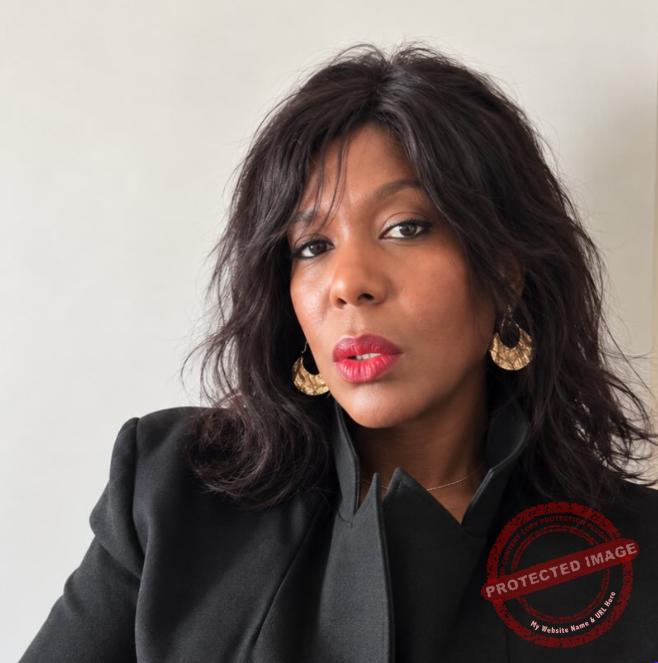
F.J. Diop lives between Paris and the United Kingdom, where she writes psychologically intimate, compulsively readable fiction about people under pressure. Her debut, The Third Season, available either as a complete novel or in three parts as The Acts, is the kind of story that turns you from a reader into a helpless bystander.
Reading the first book, I felt this constant urge to pause the story and tell the characters, ‘Wait a second, have you really thought about the consequences of what you’re doing?’ It keeps you in a state of constant doubt and tension, and the second book completely blew my mind, it kept me guessing at every turn and put me through a total psychological rollercoaster.
Let’s see what insights we can gain from the author.
Interview Questions
- 1. For many readers, a great book isn’t just about words on a page; it’s a full sensory experience. If your book/books were a physical element (a specific weather, a texture, or a taste), what would it feel like?
My book The Third Season would be a warm, flaky, buttery croissant or a very spicy margarita depending on where you are in the story.
- 2. Many readers experience stories as vivid movies playing out in their heads rather than linear sentences. When you write, do you see the scenes unfolding visually first, or do you hear the characters’ voices?
Oh, that’s a great question! Many of my books start out as a single short sentence. I pull the thread and unravel scenes like short clips; maybe that’s the reason why I write in short vignettes.
- 3. If you were forbidden from using written language to summarize your main character, what 3 songs, objects, or images would you hand someone to explain who they are?
I would have “Stop Me” by Mark Ronson for my main guy H.C.; for Noelle, I’d have “No Ordinary Love” by Sade; and for the general atmosphere, Portishead’s “Glory Box” to summarize that sultry, smoky, sexy, sensual vibe I tried to create.
- 4. Every book has hidden patterns, subtle details, or background elements that most people miss on a first read. What is one tiny, easily overlooked detail in your book/books that holds a massive secret meaning for you?
Love that you asked. Without giving away too much, my book is pretty recursive; scenes can be mirrored at times. I play a lot with duality, so things go in pairs in my book, but if I had to point out a tiny recursive thing I‘d say pay attention to when I mention “the cold.”
- 5. Years from now, a reader might forget the exact plot points or character names, but they’ll remember how your book/books made them feel. What is the single emotional residue you want left behind in their mind?
I want readers to remember what it felt like to watch two people truly see one another. Beyond the attraction, beyond the sex, beyond everything that makes their relationship complicated. That extraordinary, almost frightening intimacy of being understood by another human being.
- 6. If you could step inside your book/books for just 10 minutes as an invisible observer, which specific scene would you want to physically stand in and experience?
I would want to be a fly on the wall in the scene called “Relapse”. Where, after a long time away from each other, my two main characters see each other again and have to exercise tremendous restraint so as not to cross the ultimate line.
- 7. Writing a book is a constant wrestling match with words. Was there a scene or a concept that felt almost impossible to translate into language, no matter how many times you rewrote it?
I’m quite ruthless with words. I want to convey as much feeling as possible with as few of them as necessary. If I can’t find the exact sequence that produces the feeling I’m after, I’ll wrestle with it for hours, sometimes only to cut the entire passage.
One scene that survived was The Threshold. I had to write a character approaching a morally reprehensible decision, but I wanted something more unsettling than simply watching him make it. I wanted the reader to realise they’d been quietly encouraging him all along.
- 8. If your main character suddenly gained full control over their own fate and decided to walk away from the main plot of your book/books, what totally different life would they choose?
Oh, my H.C. isn’t going anywhere; he says so in the book! He would not have it any other way. He would still be a Famous movie star with a messy love life! My Noelle, on the other hand, would still be a woman who understands her worth and builds, creates, and be a successful as an entrepreneur.
- 9. If you had to design a 3-frame comic or a short silent animation that captures the exact heart of your book/books without a single word of text, what would we see?
You would see exactly the paperback covers of the three acts of the saga: Her alone, Them together, Him alone.
- 10. Books often transform the reader, but they also change the writer. What is something you see or understand differently about the real world now that you’ve finished writing your book/books?
I will never be quite the same again. Writing The Third Season was cathartic, but when I finished, I felt scraped raw. Coming down from inhabiting two very complicated souls was rough. They’d practically possessed me! What changed was my understanding of how contradictory people can be. How someone can love deeply and still cause terrible damage. How we can recognise the right thing to do and choose otherwise. I knew these things intellectually before. Writing this book made me live inside them.
Links to find the author:
Leave a Reply