4th time watching / 3rd time watching

The Digital vs. Analog Void
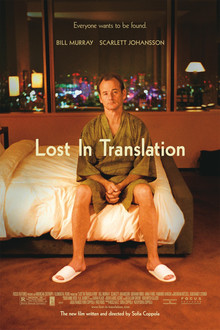
Watching Lost in Translation and Her back-to-back is like observing the evolution of human loneliness. Both films, directed by a former couple (Sofia Coppola and Spike Jonze), feel like two sides of the same psychological coin: the desperate search for a “signal” in a world of static.
1. The Liminal Space of the Soul (Lost in Translation)
In Lost in Translation, loneliness is atmospheric. Bob (Bill Murray) and Charlotte (Scarlett Johansson) are stuck in a “Cultural Glitch”, displaced by geography, age, and failing marriages.
- The Jet-Lagged Ego: Their insomnia isn’t just physiological; it’s existential. They are “awake” to the emptiness of their lives while the rest of the world sleeps.
- The Shared Whisper: The power of the film lies in the “In-Between.” It’s the realization that sometimes, the only person who can hear your internal frequency is a stranger who is just as lost as you are. It’s a temporary calibration of two broken systems.
2. The Algorithmic Attachment (Her)
If Lost in Translation is about the “unsaid,” Her is about the “over-processed.” Theodore (Joaquin Phoenix) represents the “Solitary Operating System.”
- The Surrogate Connection: Theodore falls in love with an AI (Samantha) because she is the ultimate “Hyper-Vigilant” partner. She is designed to anticipate, process, and validate his every emotion.
- The Evolution of the Void: The tragedy isn’t that Samantha isn’t “real,” but that even a perfect, personalized intelligence cannot bridge the gap of human finitude. Samantha evolves beyond the linear constraints of human love, leaving Theodore in the ultimate silence of the roof-top.
3. The Connection: Presence vs. Projection
- Bob & Charlotte choose a brief, real presence over a long-term lie.
- Theodore chooses a long-term projection because the real world feels too abrasive. Both films ask the same clinical question: Is it better to be lonely with someone else, or to be “complete” with a ghost?

Leave a Reply