3rd time watching.
THE FILM MIND: THE DEPRESSION GLITCH
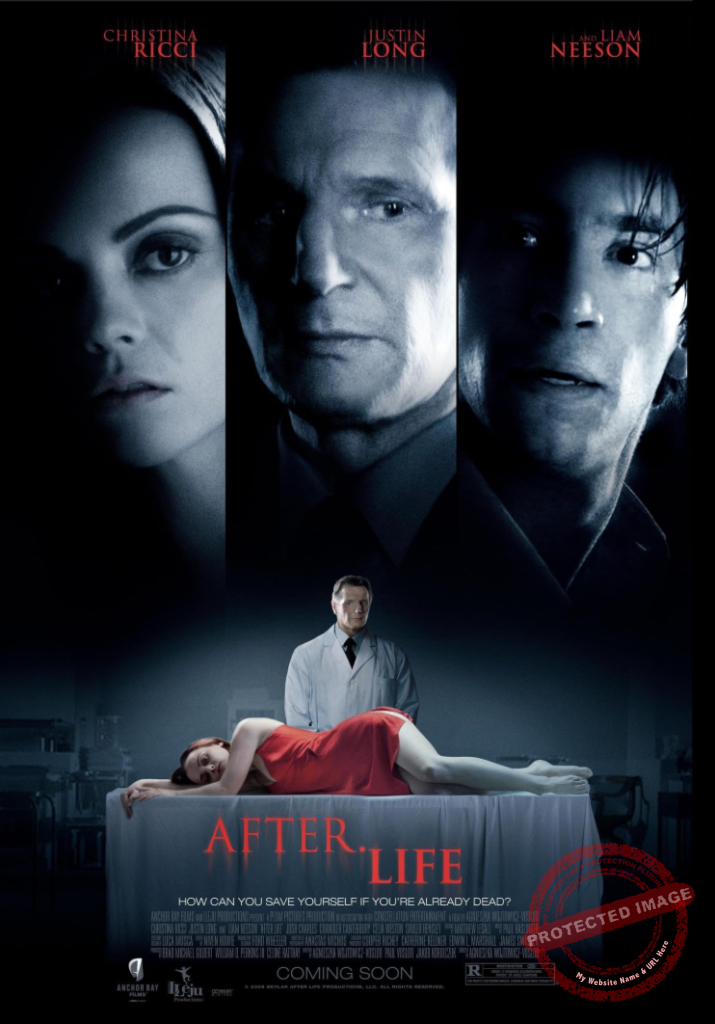
Watching After.Life (2009) reveals a truth hidden in plain sight: this isn’t a supernatural horror. It is a meticulous, step-by-step breakdown of the suicidal mind. In clinical terms, we can call this “The Glitch”, the precise moment the brain stops processing life and begins organizing its own end.
The Anatomy of a Planned Exit
1. The Crash
The accident wasn’t a tragedy of chance it represents a manifestation of internal collapse. The crash is the physical “acting out” of a mind that had already ceased to function. Anna(Christina Ricci) didn’t just hit a truck, she invited the impact to match her internal state.
2. The Ritual of Detail
Suicidality is often a highly organized mental construct. Anna’s stay in the funeral home serves as the psychological stage for a final rehearsal. By visualizing her own stillness and the cold reality of being “gone,” she is practicing the silence she craved and organizing the granular details of her own disappearance.
3. The Personification of the Inner Critic
Eliot Deacon (Liam Neeson) isn’t a medium; he is the Externalized Voice of Depression. He employs the exact gaslighting techniques of a severe depressive episode, convincing Anna she was “already dead” long before the impact. He represents the cold, logical voice that justifies surrender, making death feel like the only “honest” option for those who feel hollow.
4. The Red Dress & The Paradox of Eros
The vibrant red against the sterile grey morgue is the ultimate “Glitch.” It is the last fragment of the Ego screaming to be seen. It represents that terrifying moment where the survival instinct wakes up, only to find itself trapped in a ritual that has already been set in motion.
Anna didn’t die because of a car crash. The crash was simply the moment her physical reality caught up with her mental state. She didn’t fall, she meticulously organized her own descent.
So, was Eliot a monster, or just the mirror of Anna’s final decision? Is he a murderer, or simply the personification of a choice already made?
To expand on why this interpretation holds such weight, we must look at the Cinematic Validity of the “Glitch.” Director Agnieszka Wojtowicz-Vosloo leaves the ending ambiguous, but the true horror is the Psychological Path.
Eliot isn’t just a man; he is a projection, the Externalized Voice of Depression. His insistence that Anna is “dead” while she still breathes is a perfect mirror of Cotard’s Delusion (the psychotic belief that one is already rotting).
The Contagion: Jack’s Descent
The “Glitch” doesn’t stop with Anna, it consumes Paul(Justin Long) too. Depression is a shared frequency. By the end, Paul isn’t just grieving, he becomes the next subject. His inability to distinguish reality from Eliot’s whispers shows how the suicidal mind “infects” its surroundings. He doesn’t just lose Anna, he loses his tether to the living.
A Personal Reflection
I don’t write this as a detached observer. Seven years ago, I lived through my own version of this “Glitch.” I know the sound of that voice telling you that you’ve already left, even while your heart is still beating.
Watching this film years later is an autopsy of a state of mind I once called home. Anna didn’t just fall, she was convinced she had nowhere else to go. Understanding this “Glitch” is the first step in finally choosing to wake up.
Also I was so deep in this “Glitch” I probably would’ve argued with the funeral director about the lighting at my own wake.
I was convinced I was a ghost, but it turns out I’m a terrible one, I kept forgetting to stay still and had this annoying habit of wanting tea and coffee, and a cigarette that pairs well with the coffee.
I eventually fired my internal Eliot Deacon. His famous line, “You people think that just because you breathe, you are alive,” stopped working on me when I realized that being dead is a full-time job with zero benefits. I’ll stick to being alive and making dark jokes about it.
Resources for those in the “Glitch”:
You don’t have to carry this burden alone:
1. Find A Helpline: A simple way to find free, confidential support services available in your country.
2. Befrienders Worldwide: A global network of volunteers ready to listen without judgment, no matter where you are.
Blog Categories*
*This blog extends ideas from the novels, reflections, process writing, and lived experience behind the stories.
Leave a Reply