
2st time watching.
THE FILM MIND: THE RESTLESS ARCHITECT
When looking at the structure of a narrative like A Beautiful Mind, my focus is on the profound mechanics of an unquiet intellect. The film offers a visceral look into a mind that is entirely incapable of flat processing. John Nash’s world is not built on standard data; it is a three-dimensional, dynamic ecosystem where patterns bleed out of window panes and secret codes decode themselves in real-time.
- The Architecture of the Subconscious: Nash doesn’t just think; he constructs. His mind operates in a state of radical, hyper-analytical honesty where everything, from the movement of pigeons to the tie patterns of his colleagues, must be mapped and deconstructed. This is the ultimate depiction of a brain that doesn’t switch off at 5 PM. The tragedy and the beauty of his structure lie in the fact that his internal processing speed is so committed to finding the truth that it begins to generate its own reality just to keep up with the demand for patterns.
- The Weight of the Boulder: The film masterfully strips away the superficial glamor of genius to expose the raw exhaustion beneath it. Nash’s journey isn’t a walk down a straight path; it is a brutal, relentless climb up a mountain, pushing a boulder of crushing cognitive overload. The system stays in a constant state of high arousal, working three times harder than the “typical” minds around him just to anchor himself to a shared reality. It is a testament to sheer grit, conquering a chaotic internal wasteland day after day.
- The Functional Reintegration: The climax of Nash’s internal arc isn’t a “cure,” but a brilliant, painful truce. He stops fighting the noise and learns to coexist with the ghosts of his mind. By acknowledging that his projections will never truly sleep, he integrates them into his functional ecosystem. He chooses authenticity over a forced illusion of normalcy, finding a core of unfiltered resilience that allows him to look at his own chaotic thoughts and say, “I no longer apologize for the weight.”
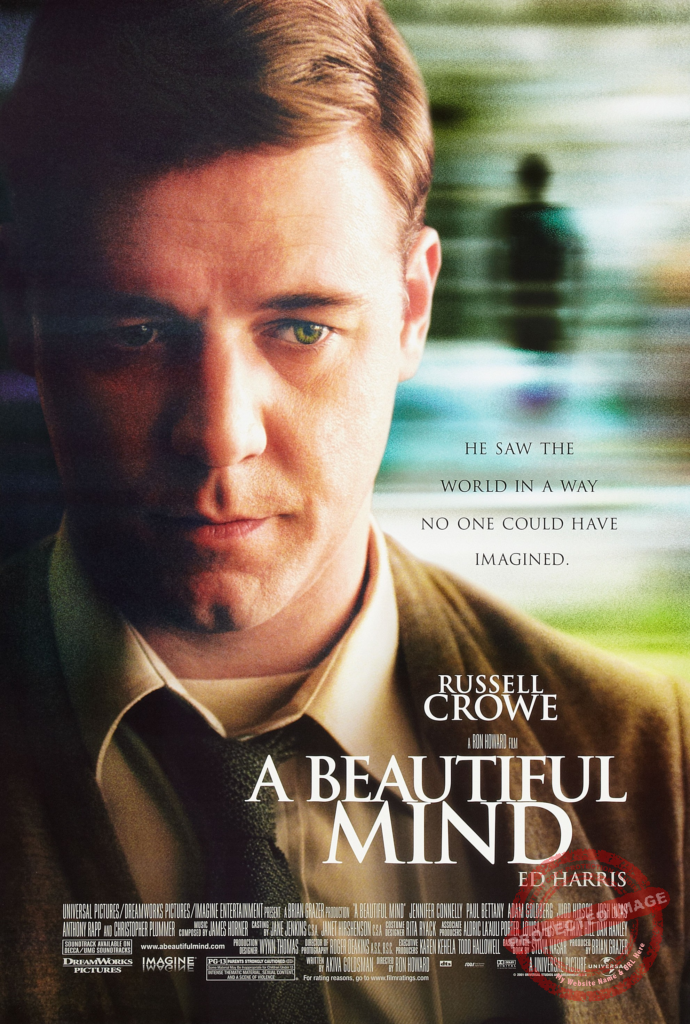
A cinematic masterpiece that proves peace is never the absence of thought, but the harmonious integration of a mind that refuses to stay still.
A Personal Reflection
Watching John Nash stare at blackboards covered in complex, interlocking webs of data felt less like watching a historical drama and more like a direct translation of my own internal landscape. I recognized that exact state of living, where information is never just flat text, but a living, breathing structure that you rotate and explore even when your eyes are closed.
I know the precise cost of that exhaustion. There is a specific kind of fatigue that comes with a brain that treats every waking moment as a forensic audit of reality, mapping the unseen patterns in the room while everyone else is just enjoying the conversation. Watching Nash’s mind run a constant, background file download until his system literally redlines was deeply validating. My own dreams are frequently crowded with data, continuing the work of the day into the night, refusing to give me a clean slate.
For years, I looked at this hyper-analysis as a glitch that made the social world a constant struggle. But like the final chapters of Nash’s life, I’ve stopped trying to find the “easy” way or begging my brain to hit the brakes. This relentless effort, this constant pushing of the boulder up the mountain, is precisely what builds the muscles needed to hold the weight of the world without breaking. It strips away the superficial “Surface Talk” and leaves you with an unyielding sincerity.
A Beautiful Mind reminded me that we shouldn’t look for a way to erase the chaos. Our minds may be restless, our internal radar might be too intense for the room, and the climb will always be three times harder. But there is an ultimate peace in accepting the design of your own ecosystem. We might be standing on the barricades, fighting a quiet war against our own overstimulation, but we are also the only ones who truly know what the view from the top of that mountain feels like.

Blog Categories*
*This blog extends ideas from the novels, reflections, process writing, and lived experience behind the stories.
Leave a Reply