Instinct Is Not the Enemy
The Iron Howl does not erase instinct. It contains it.
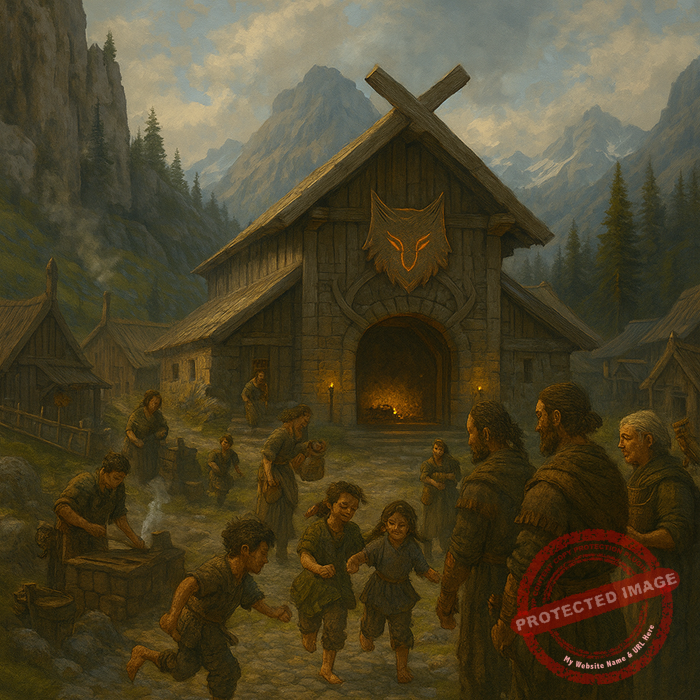
This is a vast land of wild valleys, highland forests, and cliffs split open by storms. Each clan holds its own region and governs itself by its own laws, yet all stand beneath one protection: Kael Stormrend. Not because he dominates them, but because he understands what happens when instinct is left alone without structure.
Why Iron Howl Exists
When I was writing Book Two, this realm emerged during a phase where I was learning that instinct is not the enemy. Instead, suppressing it only made it louder. As a result, letting it run unchecked made it dangerous. Therefore, what it needed was form. Witness. Boundary.
That’s what Iron Howl is.
Restraint Is a Learned Strength
The Moonforge stands at its heart, not just as a place that shapes weapons, but as the forge that tempers raw force. In contrast, destruction does not prove strength. Instead, restraint proves strength through knowing when to strike and when to stand down.
For this reason, sacred hunting rites do not glorify violence. They teach responsibility for what is taken and what is spared.
The Social Shape of the Howl
Each clan governs itself, and that matters. No single voice claims ownership over instinct. Instead, Iron Howl distributes instinct, ritualizes it, and holds it accountable through oath binding and spiritual trials. Ultimately, Iron Howl does not deny power; it witnesses it.
Kael’s role as king is not to tame Iron Howl. Rather, it is to stand with it.
In my own process, Iron Howl marks the phase where I stopped fearing my reactions: anger, protectiveness, intensity, and began asking what they were trying to protect. Therapy did not silence these forces. It was about learning their language, their limits, their needs.
Elemental warfare exists here because emotion is elemental.
Oaths matter because instinct needs commitment.
Trials exist because meaning must shape raw force.
Iron Howl is not a place of chaos.
It is a place where chaos was finally taught how to belong.
Blog Categories*
*This blog extends ideas from the novels, reflections, process writing, and lived experience behind the stories.
Leave a Reply